


Beyond army stew and military bases lies a far older story — one buried in the land itself
UIJEONGBU, South Korea — What does the name Uijeongbu call to mind?
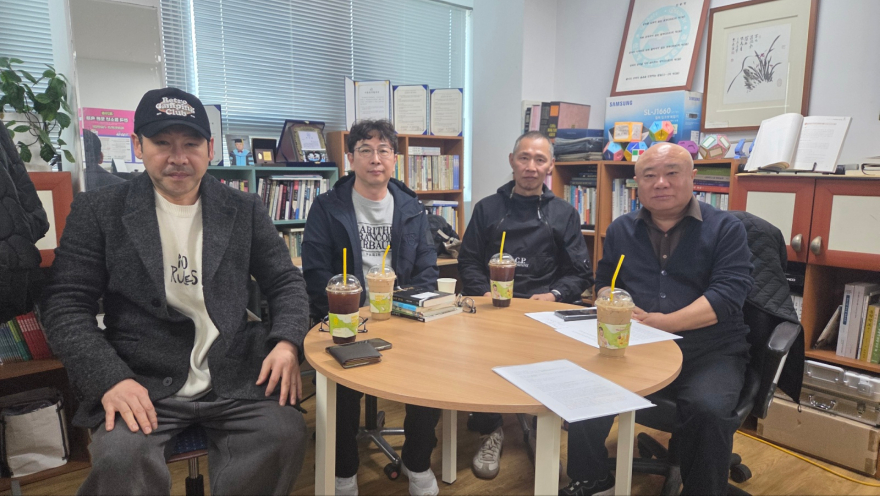
For some, it evokes the faint echo of unfamiliar music drifting over the barbed-wire fences of an American military base. For others, it is the taste and smell of budae jjigae — the spicy “army stew” that came to symbolize a city shaped by war, scarcity and survival.
For more than half a century, Uijeongbu has been defined, often reductively, by that identity: a base town, a byproduct of division, a landscape marked by the afterlife of the Korean War. Its name has long been consumed as shorthand for militarization, dependency and memory tinged with exploitation.
But beneath that familiar image lies another Uijeongbu, one far older, deeper and more luminous — a place whose very place names may hold the sediment of thousands of years of history.
To recover that buried inheritance is not merely an exercise in nostalgia. It is, increasingly, a question of what kind of city Uijeongbu wishes to become.
A Land of Extraction — or of Memory and Devotion?
For years, one common explanation of Uijeongbu’s name traced it to the Joseon Dynasty and to the burdens of tribute and administration — a place associated with state extraction, duty and the machinery of officialdom.
Yet a different reading emerges from old maps, including Kim Jeong-ho’s famed Daedongyeojido. There, some local historians point to a variant that suggests a different emotional texture: not simply a bureaucratic designation, but a name that may be read as a “hill of deliberation and feeling,” imbued with affection, remembrance and reverence.
In that interpretation, Uijeongbu is not fundamentally a place of exploitation, but a place marked by sacrifice and devotion — a site where memory, rather than power, gave shape to the land.
Whether all historians would accept that reading is beside the larger point. What matters is the desire, among some residents and cultural advocates, to reclaim Uijeongbu from the narrow frame through which it has long been viewed. The argument is not just about etymology. It is about dignity.
Before Modern Korea, Before Joseon, There Was Baekje
That effort to restore meaning to Uijeongbu does not stop with the city’s name. It reaches much further back — beyond the modern military era, beyond Joseon, and into the earliest layers of Korean state formation.
In the Beomgol area of Howon-dong stands Iseong Fortress, or Iseongsanseong, a site that some local scholars and civic groups regard as far more than a simple mountain fortification. According to one tradition, it is linked to two foundational figures in early Baekje history: So Seo-no and Onjo, often associated with the kingdom’s origins. In this telling, the “two sages” of the fortress are not symbolic abstractions but echoes of a political beginning.
Texts including the Samguk Sagi, as well as local historical studies, have been cited by those who argue that this area may correspond to Hanbuk Wiryeseong, one of the earliest Baekje capitals. If true, the claim is profound. It would place Uijeongbu not at the margins of Korean history, but near one of its points of origin.
Nearby, in the Gwirak area of Jail-dong, dolmen sites are said to bear witness to an even older human story, one stretching back some 5,000 years. To advocates of preservation, these stones are not inert relics but evidence that Uijeongbu’s significance extends into prehistory — into the era of early polities and ancient settlement.
The implication is clear: Uijeongbu has spent too long being described through the vocabulary of the 20th century, when it may also deserve to be understood through the much older language of civilizational beginnings.
History Buried Under Concrete
That aspiration, however, collides with a more familiar Korean reality: development.
In recent years, local activists say, officially recognized dolmen and other ancient stone remains have disappeared or been damaged amid construction and urban expansion. Areas surrounding former military land and development zones have drawn particular concern, as apartment projects and land clearance put pressure on archaeological traces that, once lost, cannot be restored.
This is not just a local complaint. It is a familiar dilemma in rapidly urbanized societies: how to weigh economic need against historical continuity; how to make room for the future without erasing the very landscapes that give a place its meaning.
In Uijeongbu, that tension is unusually stark. To some, another row of high-rise apartments may signal progress. To others, it means that the city is literally building over the evidence of its oldest self.
History, after all, does not announce its disappearance with noise. More often, it vanishes quietly — beneath roads, foundations and the logic of expediency.
What Children Learn From the Place They Inhabit
For those who have championed a rethinking of Uijeongbu’s identity, the issue is not only about archaeological preservation or local pride. It is also about education, and about the stories children inherit from the places where they grow up.
A child who learns to think of home merely as “the city of army stew” is not given the same imaginative inheritance as a child who is told that this is a land connected to the beginnings of Baekje and to millennia of human settlement. The streets may be the same. The emotional geography is not.
Place, in this view, is not passive background. It shapes self-understanding. To know the history of a place is to gain a measure of confidence; that confidence can become attachment, and attachment can grow into civic responsibility. A sense of local belonging, advocates argue, is often the first step toward a wider sense of national and historical consciousness.
That is why the battle over names, sites and memory can seem so intense. It is not simply about the past. It is about the moral and cultural vocabulary available to the next generation.
A City Must Decide What It Wants to Remember
Politicians and administrators are often drawn, understandably, to what is visible and immediate: development that can be counted, measured and displayed. Historical preservation moves more slowly. It rarely delivers quick rewards. But once a city loses the physical traces of its past, the loss is not easily reversed.
The work of remembrance, then, often falls to citizens — to those willing to walk forgotten paths, revive neglected names, organize festivals, defend old fortresses and insist that a city is more than the stereotype that has attached itself to it.
For Uijeongbu, the question is no longer whether it will remain in the orbit of Seoul, or whether it will forever live in the shadow of its military past. The more pressing question is whether it will choose to see itself as a place with a deeper chronology and a richer inheritance.
Place names are, in a sense, fossils of history. They endure long after eras have passed, carrying meanings that later generations may overlook but never entirely erase. To excavate those meanings — and to turn them into a living source of civic pride — may be one of the most valuable investments a city can make.
Uijeongbu has long been known for what war made of it. It may now be time to ask what history, much older than war, still asks of it.
BEST 뉴스
-

경민고 총동문회 골프팀 SBS골프 고교골프최강전 4강 진출 쾌거 10월 13일 준결승 격돌
경민고 총동문회 골프팀 SBS골프 고교골프최강전 4강 진출 쾌거 10월 13일 준결승 격돌 경민고등학교 총동문회 골프팀이 SBS골프 고교골프최강전 8강전에서 승리를 거두며 당당히 4강 진출의 쾌거를 달성했다. 전국 각지의 명문 고교 동문들이 출전해 모교의 명예와 장학금을 걸고 맞붙... -

가을 정취 물들이는 허브아일랜드 관광객을 위한 음악회 성황
가을 정취 물들이는 허브아일랜드 관광객을 위한 음악회 성황 가수 김용국 김봉규 단장의 색소폰 연주 가수 화영,황용 등 다채로운 무대 선사 가을 정취를 더하는 허브아일랜드 관광객을 위한 음악회가 열려 방문객들의 큰 호응을 얻고 있다. 트리플에이픽쳐스와 허브아일랜드... -

글로벌문화교류연합회 MOU 협약식 및 임명장 수여식 국회서 17일 개최
글로벌문화교류연합회 MOU 협약식 및 임명장 수여식 국회서 17일 개최 글로벌문화교류연합회와 장경태 의원실이 공동으로 주최하는 글로벌 문화교류 및 상호협력 활성화를 위한 MOU 협약식 및 임명장 수여식이 다가오는 10월 17일 토요일 14시부터 17시까지 국회 제8간담회의실에서 성대하게 열린다. 글로벌... -

포천 허브아일랜드 핑크뮬리 축제와 야간개장으로 가을맞이 본격화
포천 허브아일랜드 핑크뮬리 축제와 야간개장으로 가을맞이 본격화 경기 포천시 대표 관광지인 허브아일랜드가 가을 시즌을 맞아 핑크뮬리 축제 개막과 함께 야간개장을 본격적으로 운영하며 방문객 맞이에 나섰다. 허브아일랜드는 지난 9월 19일부터 가을 대표 축제인 핑크뮬리 축제를 시작했다. 스카이 허... -

제16회 계룡군문화축제 10월 1일 화려한 개막
제16회 계룡군문화축제 10월 1일 화려한 개막 대한민국 대표 군문화 축제인 제16회 계룡군문화축제가 오는 10월 1일부터 5일까지 5일간 계룡대 활주로 일대에서 펼쳐진다. 10월 1일 개막식은 오후 6시 30분 미8군 군악대 등의 식전공연을 시작으로 막을 올린다. 이어 오후 7시부터는 소향과 포레스텔라의... -

도쿄 번호판 달고 DMZ까지… 일본 경형 로드스터 고성 통일전망대 주차장 포착
도쿄 번호판 달고 DMZ까지… 일본 경형 로드스터 고성 통일전망대 주차장 포착 29일 오전 강원도 고성군 통일전망대 주차장에 일본 현지 번호판을 부착한 경형 오픈카 한 대가 주차되어 있어 관광객들의 눈길을 사로잡았다. 해당 차량은 일본 다이하츠 사의 2인승 경형 하드탑 컨버터블인 '코펜 세로' 모델로...
전체댓글 0

추천뉴스






의정부시
more +단체
more +-

금감원 공시 개편에 삼천당제약 ‘프로핏 쉐어’ 재평가… ‘진가’ 고개를 들다
금융감독원이 제약·바이오 기업의 공시 체계를 전면 개편하고 계약금과 마일스톤, 로열티 및 이익배분 ... -

포천 신북면 ‘포담장터’ 7월 11일 개장… 먹거리·공연·나눔밥상까지 풍성
경기 포천시 신북면에서 지역 주민과 관광객이 함께 즐길 수 있는 먹거리 장터가 열린다. 포천 신북면 ... -
![[메트로기획] 붓끝에 되살린 소동파의 철학](/data/news/202607/news_1783652004.1.jpg)
[메트로기획] 붓끝에 되살린 소동파의 철학
소동파(蘇軾)의 대표 산문 〈전적벽부(前赤壁賦)〉가 이종훈 포천문화원장의 필치로 대형 서예 작품으... -
![[메트로기획] 모수국과 무지랭이골에 대한 연구 ①](/data/news/202607/news_1783613916.1.jpg)
[메트로기획] 모수국과 무지랭이골에 대한 연구 ①
경기 의정부시 고산주민센터에서 진행하는 치매예방 프로그램 ‘웃음빵빵 두뇌짱짱’ 수업 시간이었다. ...
포토뉴스
more +-

90세 노모가 입혀준 붉은 점퍼 소통과 효심으로 그리는 포천의 미래
90세 노모가 입혀준 붉은 점퍼 소통과 효심으로 그리는 포천의 미래 정치인의 선거복은 흔히 당적을 상징하지만 백영현 포천시장 후보에게 붉은 점퍼는 그 이상의 특별한 의미를 지닌다. 최근 90세 노모가 아들에게 직접 선거 운동복을 입혀주는 모습이 포착되면서 지역 사회에 잔잔한 감동을 전하고 ... -

국민의힘, 포천 시의원 선거 ‘위기론’ 확산... 승부수는 ‘필승 전략공천’
국민의힘, 포천 시의원 선거 ‘위기론’ 확산... 승부수는 ‘필승 전략공천’ 가선거구 서과석·나선거구 안애경 전면 배치설... 박윤경 후보 비례대표 선회론도 ‘솔솔’ 오는 6월 3일 제9회 전국동시지방선거를 앞두고 포천 지역 국민의힘 진영 내에서 위기감이 고조되고 있다. 선거 판세가 안개 속으... -

임종훈 포천시의장, '험로' 무소속 시의원 3선 도전...
"포천 향한 진심으로 승부" 임종훈 포천시의회 의장이 다가오는 지방선거에서 포천시장 출마 대신 '무소속으로 시의원 3선 재도전'이라는 파격적인 행보를 결정하며 지역 정가의 이목을 집중시키고 있다.그동안 유력한 시장 후보군으로 거론되며 체급을 키워온 임 의장의 이번 결정은 정치적 영달을 위한 '높... -
가을 정취 물들이는 허브아일랜드 관광객을 위한 음악회 성황
가을 정취 물들이는 허브아일랜드 관광객을 위한 음악회 성황 가수 김용국 김봉규 단장의 색소폰 연주 가수 화영,황용 등 다채로운 무대 선사 가을 정취를 더하는 허브아일랜드 관광객을 위한 음악회가 열려 방문객들의 큰 호응을 얻고 있다. 트리플에이픽쳐스와 허브아일랜드가 주최 주관하고 포천...
