


Min-kyung Kim is caring for Korean seniors in Sydney — one carefully guided repetition at a time.
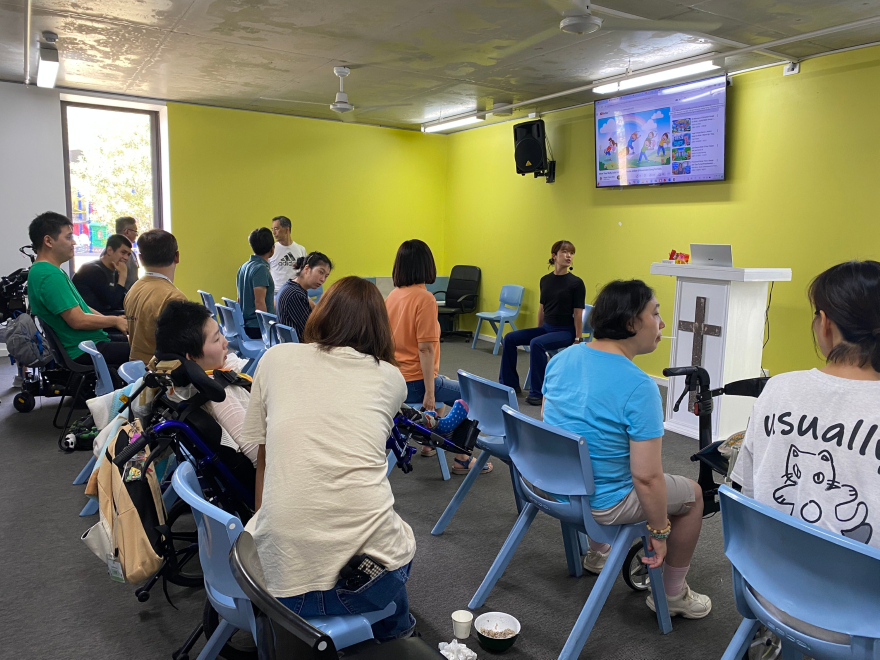
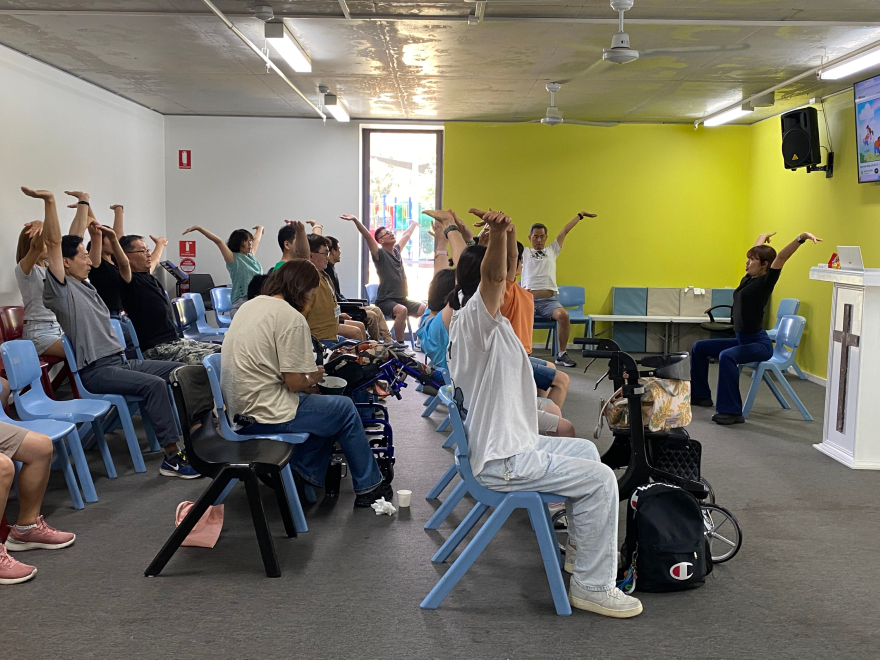
The session begins with stretching — gentle, deliberate, unhurried. It builds toward strength training. And somewhere in between, something else happens entirely: laughter surfaces, questions are exchanged, the small news of the previous week passes from person to person. For many of the participants, this hour is not simply exercise. It is, in a very real sense, the social center of their day.
Ms. Kim has been thinking about why that is for a long time.
How did you come to work specifically with seniors?
"I started out doing general fitness training. But when I began working with older adults, I realized that exercise meant something different for them — something more. When a person starts moving, their expression changes. They talk more. There's a light that comes back into their eyes. Watching that happen, I knew this was the work I needed to keep doing."
Your philosophy — that mental energy originates in the muscles — is striking. Where does that come from?
"It's grounded in physiology, not metaphor. When you exercise, your heart rate rises and your circulation accelerates. The brain receives more oxygen. That triggers the release of serotonin, dopamine, endorphins — neurotransmitters that directly influence emotional stability and the recovery of vitality. The lift in mood that people feel after a workout isn't psychological suggestion. It's a biological fact."
What do you prioritize when designing programs for older participants?
"Safety first, always. But immediately after that: the experience of achievement. It matters enormously that older adults feel — in their bodies, not just their minds — that they are capable. I've watched people who could barely manage a seated movement in their first session stand up unassisted six months later. That isn't simply a gain in muscle strength. Their confidence changes. Their daily life changes. The two things are inseparable."
Do you see applications for what you're doing in South Korea's regional elder care systems?
"The infrastructure already exists — community centers, senior welfare halls, neighborhood gathering spaces. The question is what happens inside them. If those spaces offered programs that combined strength training with emotional support, rather than passive leisure activities alone, the impact could be significant. For seniors living in isolation, exercise can become the reason they leave home, the reason they encounter another person. That's not a small thing."
She paused before adding a final thought. "When the mind is exhausted, the instinct is to sit with it — to think your way through. But the body often knows better. Move first. The mind will follow. Saving the body is the first step toward saving the mind."
Muscle Memory: How Strength Training Is Rewriting the Rules of Elder Care
The body sends its signals early.
The staircase that once required no thought begins to demand attention. The morning routine that used to unfold automatically now requires negotiation. Outings that were once unremarkable become, gradually, less frequent. And then, in the quiet that follows, something shifts in the mind as well — a heaviness that arrives not all at once, but by degrees.
Min-kyung Kim, a fitness trainer working with Korean seniors in Sydney, Australia, has spent years paying close attention to this sequence. Her conclusion is both simple and, in its implications, far-reaching: the connection between physical decline and emotional deterioration is not incidental. It is biological. And it can be interrupted.
"The vitality of the mind flows from the body," Ms. Kim says. "Specifically, from the strength of our muscles."
This is not a wellness aphorism. It is a claim with a mechanism. When the body moves with intention — when heart rate rises, when circulation quickens, when muscles are asked to work against resistance — the brain responds. Oxygen supply increases. Serotonin, dopamine, and endorphins are released. The neurochemical environment shifts. The improvement in mood that follows a genuine workout is not a matter of willpower or positive thinking. It is physiology.
Ms. Kim's program at Sydney's Meadowbank Northern Social Support Group translates this principle into practice. For participants over 65 — many of them Korean immigrants navigating the particular loneliness of aging far from home — the sessions combine structured strength training with something less easily quantified: the experience of being in a room with other people, of being seen, of having somewhere to be.
The distinction matters. Conventional elder fitness programming has long defaulted to the gentle and the passive — stretching routines, light aerobics, activities calibrated to minimize risk rather than maximize engagement. Ms. Kim's approach asks more of the body, and in doing so, returns more to the person inhabiting it.
"Exercise doesn't make your problems vanish," she says. "It changes the power with which you look at them."
For South Korea's rapidly aging regional cities, the implications are difficult to overstate. In places like Pocheon — a border city north of Seoul where an aging population, weakening community ties, and an elder care system still oriented toward passive programming converge — Ms. Kim's model suggests a reorientation that is less about resources than about philosophy.
The spaces exist: the senior centers, the community halls, the neighborhood welfare hubs. What they often lack is a conception of what elder care is actually for. If the answer is not merely the management of decline but the active reconstruction of agency — physical, emotional, relational — then the programming that fills those spaces must change accordingly.
Strength training, in this framing, is not an amenity. It is a clinical intervention. The gym and the counseling room are not separate territories. The body is not a vessel for the mind. It is the mind's most reliable instrument, and, for too many aging adults, its most neglected one.
"If your mental energy has bottomed out," Ms. Kim says, "stop thinking and start moving."
It sounds almost too simple. But in medicine, as in exercise, simplicity is often the point. What Ms. Kim is practicing in a community center in Sydney — and what the evidence increasingly supports — is that the path back to the self, for those who have lost their way in the long corridors of age, runs first through the body.
Saving the body, she believes, is the first step toward saving the mind. It is a proposition that policymakers in Seoul, and in aging cities around the world, may find increasingly difficult to set aside.
BEST 뉴스
-

경민고 총동문회 골프팀 SBS골프 고교골프최강전 4강 진출 쾌거 10월 13일 준결승 격돌
경민고 총동문회 골프팀 SBS골프 고교골프최강전 4강 진출 쾌거 10월 13일 준결승 격돌 경민고등학교 총동문회 골프팀이 SBS골프 고교골프최강전 8강전에서 승리를 거두며 당당히 4강 진출의 쾌거를 달성했다. 전국 각지의 명문 고교 동문들이 출전해 모교의 명예와 장학금을 걸고 맞붙... -

가을 정취 물들이는 허브아일랜드 관광객을 위한 음악회 성황
가을 정취 물들이는 허브아일랜드 관광객을 위한 음악회 성황 가수 김용국 김봉규 단장의 색소폰 연주 가수 화영,황용 등 다채로운 무대 선사 가을 정취를 더하는 허브아일랜드 관광객을 위한 음악회가 열려 방문객들의 큰 호응을 얻고 있다. 트리플에이픽쳐스와 허브아일랜드... -

글로벌문화교류연합회 MOU 협약식 및 임명장 수여식 국회서 17일 개최
글로벌문화교류연합회 MOU 협약식 및 임명장 수여식 국회서 17일 개최 글로벌문화교류연합회와 장경태 의원실이 공동으로 주최하는 글로벌 문화교류 및 상호협력 활성화를 위한 MOU 협약식 및 임명장 수여식이 다가오는 10월 17일 토요일 14시부터 17시까지 국회 제8간담회의실에서 성대하게 열린다. 글로벌... -

포천 허브아일랜드 핑크뮬리 축제와 야간개장으로 가을맞이 본격화
포천 허브아일랜드 핑크뮬리 축제와 야간개장으로 가을맞이 본격화 경기 포천시 대표 관광지인 허브아일랜드가 가을 시즌을 맞아 핑크뮬리 축제 개막과 함께 야간개장을 본격적으로 운영하며 방문객 맞이에 나섰다. 허브아일랜드는 지난 9월 19일부터 가을 대표 축제인 핑크뮬리 축제를 시작했다. 스카이 허... -

도쿄 번호판 달고 DMZ까지… 일본 경형 로드스터 고성 통일전망대 주차장 포착
도쿄 번호판 달고 DMZ까지… 일본 경형 로드스터 고성 통일전망대 주차장 포착 29일 오전 강원도 고성군 통일전망대 주차장에 일본 현지 번호판을 부착한 경형 오픈카 한 대가 주차되어 있어 관광객들의 눈길을 사로잡았다. 해당 차량은 일본 다이하츠 사의 2인승 경형 하드탑 컨버터블인 '코펜 세로' 모델로... -

제16회 계룡군문화축제 10월 1일 화려한 개막
제16회 계룡군문화축제 10월 1일 화려한 개막 대한민국 대표 군문화 축제인 제16회 계룡군문화축제가 오는 10월 1일부터 5일까지 5일간 계룡대 활주로 일대에서 펼쳐진다. 10월 1일 개막식은 오후 6시 30분 미8군 군악대 등의 식전공연을 시작으로 막을 올린다. 이어 오후 7시부터는 소향과 포레스텔라의...
전체댓글 0

추천뉴스






의정부시
more +단체
more +-

금감원 공시 개편에 삼천당제약 ‘프로핏 쉐어’ 재평가… ‘진가’ 고개를 들다
금융감독원이 제약·바이오 기업의 공시 체계를 전면 개편하고 계약금과 마일스톤, 로열티 및 이익배분 ... -

포천 신북면 ‘포담장터’ 7월 11일 개장… 먹거리·공연·나눔밥상까지 풍성
경기 포천시 신북면에서 지역 주민과 관광객이 함께 즐길 수 있는 먹거리 장터가 열린다. 포천 신북면 ... -
![[메트로기획] 붓끝에 되살린 소동파의 철학](/data/news/202607/news_1783652004.1.jpg)
[메트로기획] 붓끝에 되살린 소동파의 철학
소동파(蘇軾)의 대표 산문 〈전적벽부(前赤壁賦)〉가 이종훈 포천문화원장의 필치로 대형 서예 작품으... -
![[메트로기획] 모수국과 무지랭이골에 대한 연구 ①](/data/news/202607/news_1783613916.1.jpg)
[메트로기획] 모수국과 무지랭이골에 대한 연구 ①
경기 의정부시 고산주민센터에서 진행하는 치매예방 프로그램 ‘웃음빵빵 두뇌짱짱’ 수업 시간이었다. ...
포토뉴스
more +-

90세 노모가 입혀준 붉은 점퍼 소통과 효심으로 그리는 포천의 미래
90세 노모가 입혀준 붉은 점퍼 소통과 효심으로 그리는 포천의 미래 정치인의 선거복은 흔히 당적을 상징하지만 백영현 포천시장 후보에게 붉은 점퍼는 그 이상의 특별한 의미를 지닌다. 최근 90세 노모가 아들에게 직접 선거 운동복을 입혀주는 모습이 포착되면서 지역 사회에 잔잔한 감동을 전하고 ... -

국민의힘, 포천 시의원 선거 ‘위기론’ 확산... 승부수는 ‘필승 전략공천’
국민의힘, 포천 시의원 선거 ‘위기론’ 확산... 승부수는 ‘필승 전략공천’ 가선거구 서과석·나선거구 안애경 전면 배치설... 박윤경 후보 비례대표 선회론도 ‘솔솔’ 오는 6월 3일 제9회 전국동시지방선거를 앞두고 포천 지역 국민의힘 진영 내에서 위기감이 고조되고 있다. 선거 판세가 안개 속으... -

임종훈 포천시의장, '험로' 무소속 시의원 3선 도전...
"포천 향한 진심으로 승부" 임종훈 포천시의회 의장이 다가오는 지방선거에서 포천시장 출마 대신 '무소속으로 시의원 3선 재도전'이라는 파격적인 행보를 결정하며 지역 정가의 이목을 집중시키고 있다.그동안 유력한 시장 후보군으로 거론되며 체급을 키워온 임 의장의 이번 결정은 정치적 영달을 위한 '높... -
가을 정취 물들이는 허브아일랜드 관광객을 위한 음악회 성황
가을 정취 물들이는 허브아일랜드 관광객을 위한 음악회 성황 가수 김용국 김봉규 단장의 색소폰 연주 가수 화영,황용 등 다채로운 무대 선사 가을 정취를 더하는 허브아일랜드 관광객을 위한 음악회가 열려 방문객들의 큰 호응을 얻고 있다. 트리플에이픽쳐스와 허브아일랜드가 주최 주관하고 포천...
