


- What Uijeongbu’s “Policy Market” Revealed Was Not Mere Civic Participation, but the Possibility of Civic Design
For local democracy to mature, it is not enough for government to merely listen to residents. Citizens must be allowed to help shape policy itself. That is what made Uijeongbu’s “2026 Culture City Policy Market” feel less like a public event and more like a glimpse of a different governing philosophy.
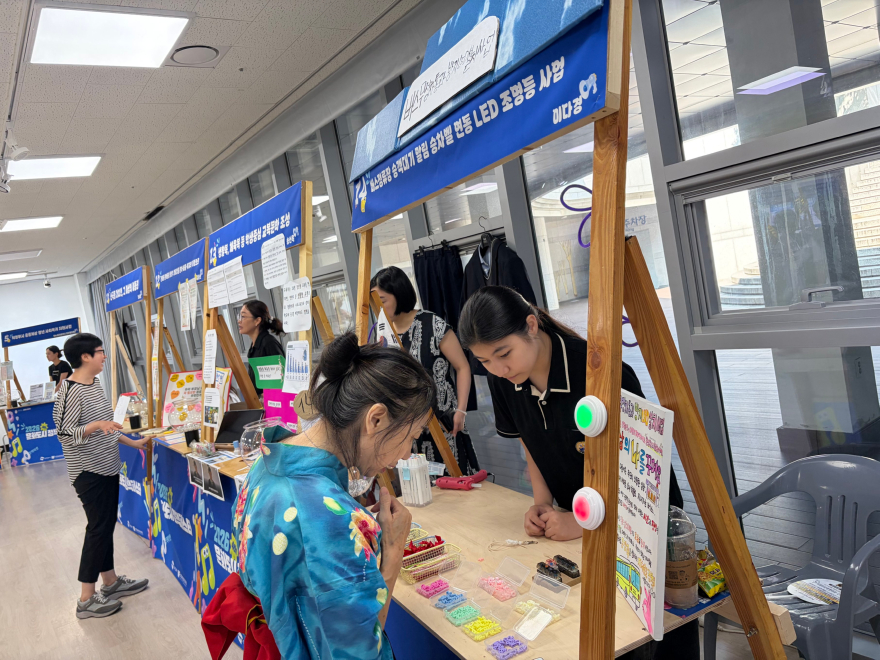
Over the course of the program, residents turned everyday frustrations and local aspirations into policy proposals, then subjected those ideas to public display, discussion and voting. The process raised a deceptively simple question: In whose language should policy be written? The answer offered in Uijeongbu was strikingly clear. Policy becomes more credible, more practical and more democratic when it begins not as an administrative abstraction, but as lived experience.
What stood out most about the proposals on display was their attention to ordinary life. One of the most compelling ideas sought to address a familiar but underexamined problem: buses passing stops at night without recognizing waiting passengers. The proposal envisioned an LED alert system linked to a passenger button, making it easier for drivers to see, especially in poorly lit or outlying areas.
The idea was notable not because it was technologically sophisticated, but because it was so precisely rooted in reality. It identified a problem that many residents likely experience yet few policymakers would notice from an office. Rather than treating the issue as a routine complaint, the proposal translated inconvenience into design and frustration into a workable civic solution. That is often how good policy begins.
Another proposal, focused on the Chukseongnyeong area, carried broader implications. By addressing transportation flow, logistics and intercity linkage in a border zone between Uijeongbu and Pocheon, it suggested that the policy market was not merely a venue for small-scale civic fixes. It was also a space in which residents could think structurally, across municipal boundaries and beyond narrow administrative categories.
That matters. Governments often think in jurisdictions; citizens live in regions. People commute, shop, travel and build routines without regard for the neat lines that divide one municipality from another. A policy idea that recognizes these overlapping geographies is not simply imaginative. It is more faithful to how life is actually lived.
The deeper significance of Uijeongbu’s policy market, however, lies less in any single idea than in the form it represents. For decades, local government in many places has operated through a familiar sequence: officials identify needs, draft plans, allocate budgets and then explain the results to the public. Expertise and procedure are, of course, necessary. But when citizens are consistently placed at the very end of the process — as recipients, respondents or critics — much of a community’s creativity and practical knowledge is left untapped.
The policy market reversed that order. It placed citizens at the beginning. Residents identified problems, proposed remedies, shared them with others and then tested their viability through public and administrative scrutiny. This was not participation as symbolism. It was participation as authorship.
Such experiments are especially important in an era when local governance must become more responsive, not less. Residents are often the first to detect what institutions overlook: the bus stop where people are routinely passed by, the road that feels unsafe in practice, the disconnected public space that weakens everyday mobility. Reports and data remain essential, but lived experience is not a lesser form of knowledge. In many cases, it is the sharper one.
If local government can build systems that capture and refine that knowledge, policy can become not only more humane but more precise. Many public failures stem from a simple problem: decisions are made without enough understanding of how people actually move through their day. Seen in that light, civic experience is not anecdotal input. It is a serious policy resource.
Still, efforts like this will matter only if they lead somewhere. A policy market cannot become a decorative exercise in public engagement, a well-lit showcase of citizen enthusiasm that ends when the booths come down. If residents spend two months in seminars and discussions refining proposals only to see them absorbed into festival atmosphere and forgotten, the process will breed cynicism rather than trust.
What matters most comes after the applause. By what standards will proposals be judged? Which ideas will move into departmental review? What are the chances of budget allocation? If a proposal is rejected, will the public be told why? Without transparent answers to those questions, even the most impressive exercise in participation risks feeling performative.
There is also value in acknowledging the limits of citizen-generated ideas. Residents may offer immediacy, originality and practical insight, but they are not always positioned to fully assess legal constraints, maintenance costs, interdepartmental coordination or fiscal feasibility. That is not a weakness of public participation; it is a reminder that participation must be matched by institutional scaffolding.
For platforms like this to succeed, they need a credible bridge between civic imagination and administrative execution: expert guidance, cross-agency coordination, pilot funding and a clear process for turning proposals into testable policy. If participation is open but implementation remains closed, public energy will eventually dissipate.
And yet the achievement in Uijeongbu should not be understated. Policy does not always begin with grand doctrine. Sometimes it begins with a missed bus, an awkward boundary, an inefficient corridor, a small but persistent break in everyday life. Governments are often drawn to large plans; citizens are often better at noticing the minor frictions that define whether a city feels livable or not. In the end, the quality of urban life is often determined by how seriously those small frictions are taken.
That is what Uijeongbu’s policy market made visible. Citizens need not remain the objects of policy; they can become its makers. Lived experience is not a secondary or less sophisticated form of civic intelligence. Often, it is the earliest signal of what government has yet to see.
The real question now is whether these ideas will remain admired or become enacted.
The strength of local democracy is not measured by the number of public events it can stage. It is measured by how effectively citizens’ voices are translated into budgets, programs and institutions. If Uijeongbu can develop this policy market into something more than a one-time celebration — into a durable platform for civic design — it may offer not just a model for one city, but a more ambitious model for local governance itself.
Policy is not far away. It begins in the texture of daily life. And when an ordinary citizen’s observation is allowed to become public action, democracy stops being ceremonial and starts to move.
BEST 뉴스
-

‘뜨거운 열정으로 하나 된다’… 포천중·일고 총동문회, 제18회 한마음축제 10월 3일 개최
‘뜨거운 열정으로 하나 된다’… 포천중·일고 총동문회, 제18회 한마음축제 10월 3일 개최 가을의 문턱에서 동문 간의 끈끈한 정을 확인하고 화합을 다지는 뜻깊은 축제의 장이 열린다. 포천중·일고 총동문회가 주최하는 ‘제18회 한마음축제’가 오는 10월 3일(토) 성대하게 펼쳐진다. 이번 축제는 ‘뜨거... -

독수리유격대 전몰대원 추모행사 노곡리 전적비서 엄수
독수리유격대 전몰대원 추모행사 노곡리 전적비서 엄수 포천 청년 63명 자발적 결성… 백영현 시장 "거룩한 희생과 헌신 끝까지 기억할 것" 6·25전쟁 당시 조국 수호를 위해 계급과 군번도 없이 분연히 일어섰던 포천 출신 청년 유격대원들의 숭고한 넋을 기리는 자리가 마련됐다. 독... -

가을 정취 물들이는 허브아일랜드 관광객을 위한 음악회 성황
가을 정취 물들이는 허브아일랜드 관광객을 위한 음악회 성황 가수 김용국 김봉규 단장의 색소폰 연주 가수 화영,황용 등 다채로운 무대 선사 가을 정취를 더하는 허브아일랜드 관광객을 위한 음악회가 열려 방문객들의 큰 호응을 얻고 있다. 트리플에이픽쳐스와 허브아일랜드... -
사단법인 태사모봉사회 제136회 추석명절 선물 송편 나눔행사 성료
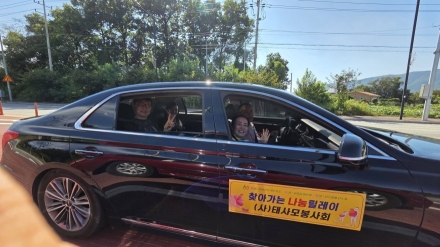
사단법인 태사모봉사회 제136회 추석명절 선물 송편 나눔행사 성료 사단법인 태사모봉사회가 추석 명절을 앞두고 관내 취약계층과 소외된 이웃을 위한 나눔 행사를 열었다. 2026년 9월 20일 열린 이번 행사에는 백영현 포천시장과 김용태 국회의원, 최홍화 포천시의원, 강효진 포천시자원봉사센터장 ... -

포천 허브아일랜드 핑크뮬리 축제와 야간개장으로 가을맞이 본격화
포천 허브아일랜드 핑크뮬리 축제와 야간개장으로 가을맞이 본격화 경기 포천시 대표 관광지인 허브아일랜드가 가을 시즌을 맞아 핑크뮬리 축제 개막과 함께 야간개장을 본격적으로 운영하며 방문객 맞이에 나섰다. 허브아일랜드는 지난 9월 19일부터 가을 대표 축제인 핑크뮬리 축제를 시작했다. 스카이 허... -
포천소방서, 재난약자 맞춤형 안전교육 위해 경기도국민안전체험관 견학 실시
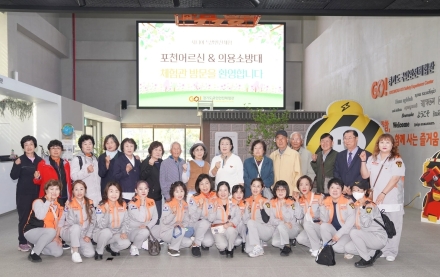
포천소방서, 재난약자 맞춤형 안전교육 위해 경기도국민안전체험관 견학 실시 포천소방서는 10월 6일 경기도국민안전체험관을 방문해 포천시 재난약자를 대상으로 맞춤형 안전교육 및 체험활동을 실시했다고 밝혔다. 이번 견학은 재난에 취약한 어르신들의 재난 대응능력을 높이고, 의용소방대와 함께...
전체댓글 0
실시간뉴스

추천뉴스






의정부시
more +단체
more +-

금감원 공시 개편에 삼천당제약 ‘프로핏 쉐어’ 재평가… ‘진가’ 고개를 들다
금융감독원이 제약·바이오 기업의 공시 체계를 전면 개편하고 계약금과 마일스톤, 로열티 및 이익배분 ... -

포천 신북면 ‘포담장터’ 7월 11일 개장… 먹거리·공연·나눔밥상까지 풍성
경기 포천시 신북면에서 지역 주민과 관광객이 함께 즐길 수 있는 먹거리 장터가 열린다. 포천 신북면 ... -
![[메트로기획] 붓끝에 되살린 소동파의 철학](/data/news/202607/news_1783652004.1.jpg)
[메트로기획] 붓끝에 되살린 소동파의 철학
소동파(蘇軾)의 대표 산문 〈전적벽부(前赤壁賦)〉가 이종훈 포천문화원장의 필치로 대형 서예 작품으... -
![[메트로기획] 모수국과 무지랭이골에 대한 연구 ①](/data/news/202607/news_1783613916.1.jpg)
[메트로기획] 모수국과 무지랭이골에 대한 연구 ①
경기 의정부시 고산주민센터에서 진행하는 치매예방 프로그램 ‘웃음빵빵 두뇌짱짱’ 수업 시간이었다. ...
포토뉴스
more +-

90세 노모가 입혀준 붉은 점퍼 소통과 효심으로 그리는 포천의 미래
90세 노모가 입혀준 붉은 점퍼 소통과 효심으로 그리는 포천의 미래 정치인의 선거복은 흔히 당적을 상징하지만 백영현 포천시장 후보에게 붉은 점퍼는 그 이상의 특별한 의미를 지닌다. 최근 90세 노모가 아들에게 직접 선거 운동복을 입혀주는 모습이 포착되면서 지역 사회에 잔잔한 감동을 전하고 ... -

국민의힘, 포천 시의원 선거 ‘위기론’ 확산... 승부수는 ‘필승 전략공천’
국민의힘, 포천 시의원 선거 ‘위기론’ 확산... 승부수는 ‘필승 전략공천’ 가선거구 서과석·나선거구 안애경 전면 배치설... 박윤경 후보 비례대표 선회론도 ‘솔솔’ 오는 6월 3일 제9회 전국동시지방선거를 앞두고 포천 지역 국민의힘 진영 내에서 위기감이 고조되고 있다. 선거 판세가 안개 속으... -

임종훈 포천시의장, '험로' 무소속 시의원 3선 도전...
"포천 향한 진심으로 승부" 임종훈 포천시의회 의장이 다가오는 지방선거에서 포천시장 출마 대신 '무소속으로 시의원 3선 재도전'이라는 파격적인 행보를 결정하며 지역 정가의 이목을 집중시키고 있다.그동안 유력한 시장 후보군으로 거론되며 체급을 키워온 임 의장의 이번 결정은 정치적 영달을 위한 '높... -
가을 정취 물들이는 허브아일랜드 관광객을 위한 음악회 성황
가을 정취 물들이는 허브아일랜드 관광객을 위한 음악회 성황 가수 김용국 김봉규 단장의 색소폰 연주 가수 화영,황용 등 다채로운 무대 선사 가을 정취를 더하는 허브아일랜드 관광객을 위한 음악회가 열려 방문객들의 큰 호응을 얻고 있다. 트리플에이픽쳐스와 허브아일랜드가 주최 주관하고 포천...
