


- A new public-private partnership in South Korea reframes a persistent agricultural nuisance as a tool for industrial energy transition and regional resilience.
For decades, livestock manure has remained one of the most stubborn, unvarnished realities of rural life. For farmers, it represents an inescapable regulatory and financial liability; for nearby residents, a persistent source of odor and environmental friction. It is a ubiquitous crisis with historically few elegant solutions—a grievance everyone acknowledges but few can resolve. Now, the city of Pocheon is attempting to reframe this long-standing agricultural headache, shifting its lens from "waste disposal" to "resource generation."
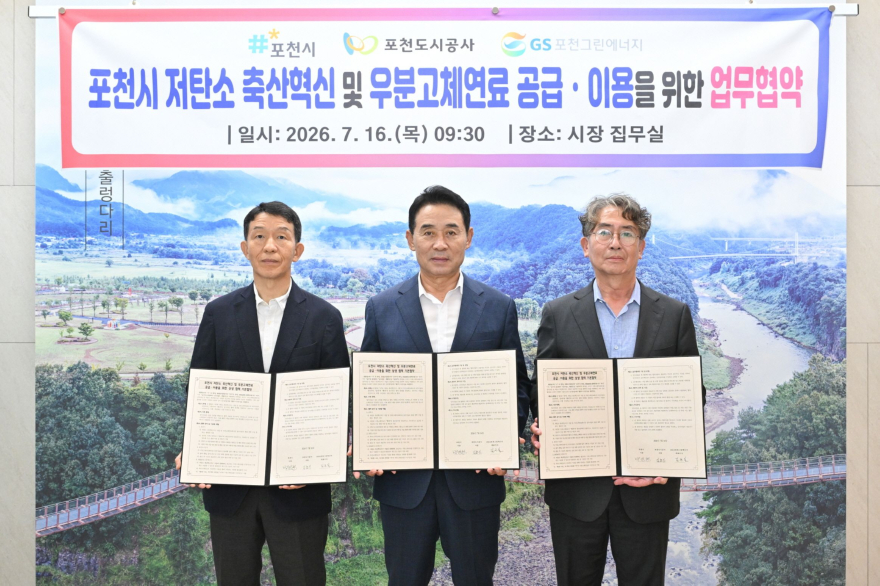
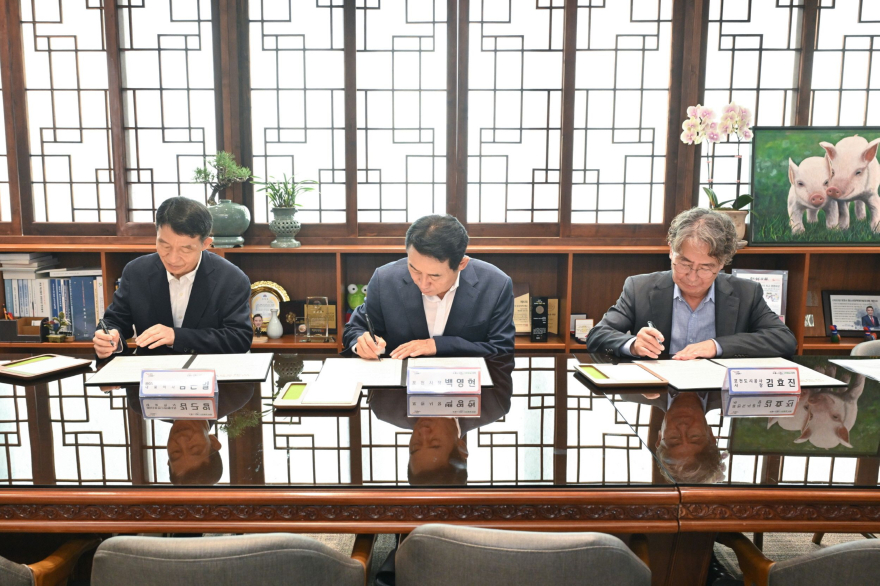
On July 16, Pocheon City, the Pocheon Urban Corporation, and GS Pocheon Green Energy entered into a landmark memorandum of understanding for low-carbon livestock innovation and the supply of solid cattle manure fuel. The mechanics of the agreement are straightforward: by moving away from traditional composting, the city aims to process raw manure into solid bio-fuel for industrial energy. The framework creates a circular economic loop where agricultural strain is mitigated by municipal strategy, executed by a public corporation, and anchored by private sector demand.
What makes this initiative compelling is not merely the addition of another municipal project. Rather, it signifies a broader conceptual leap, elevating an isolated environmental complaint into the grander policy lexicon of energy transition, local livability, and carbon neutrality. The abstract notion of converting agricultural byproducts into fuel is no longer novel. However, institutionalizing that concept—weaving it into local governance while calibrating distinct public and private liabilities—is an entirely different caliber of challenge. With this pact, Pocheon has taken its first pragmatic step.
◇ A Precise Division of Civic and Commercial Labor
The division of responsibilities within the agreement is remarkably distinct:
Pocheon City will orchestrate the overarching strategy, providing administrative and financial scaffolding while securing raw material supply lines.
The Pocheon Urban Corporation takes charge of facility construction, technological operations, and long-term maintenance.
GS Pocheon Green Energy will retrofit its existing power generation systems to absorb and burn the solid bio-fuel as a direct substitute for bituminous coal.
By assigning concrete operational duties to each stakeholder, the framework distances itself from the performative nature of typical bureaucratic announcements.
At its core, the project hinges on a profound cognitive shift. Historically viewed as an administrative liability to be suppressed, cattle manure is being repositioned as a multifunctional policy lever. If successful, livestock operations can dramatically lower their overhead, while surrounding communities benefit from immediate reductions in localized environmental tension. Concurrently, the industrial sector gains a viable pathway to displace a fraction of its fossil fuel consumption. A single waste stream suddenly becomes a tool that addresses rural welfare, local economics, and macro-level climate imperatives simultaneously.
◇ The Operational Roadblocks to True Sustainability
Yet, romanticizing the vision would be a mistake; the viability of turning manure into a true regional cure-all relies on rigorous execution.
First, a highly calibrated logistics network must materialize. Variables such as moisture consistency, fluctuations in manure quality, and transportation overhead will dictate the project's baseline feasibility. Second, the processing facility must not trade one ecological footprint for another; minimizing secondary odors and monitoring air quality are paramount to maintaining the community's trust. Finally, the economics must hold. Environmental virtue rarely survives without financial sustainability. The initiative requires a pricing architecture that private enterprise can reliably absorb, paired with durable municipal backstops.
Ultimately, the benchmark of success will be determined by operational precision rather than the nobility of its intent. Nevertheless, the endeavor deserves serious merit. Re-encoding regional environmental friction into the vocabulary of industrial and energy transition is exactly the type of localized experimentation required today. While carbon neutrality is often debated as a sprawling national or global strategy, its execution invariably begins at the grassroots level. Mitigating odor, easing agricultural stress, and transforming waste into wealth represent the most authentic frontiers of climate action.
This experiment arrives at a time when Pocheon is actively prioritizing residential satisfaction to combat regional depopulation. Within this paradigm, the manure initiative ceases to be a narrow agricultural policy. It is an act of rural urbanism—an effort to systematically eliminate localized friction and build the foundations of a genuinely livable city. Chasing population growth by merely looking outward for new arrivals is a flawed strategy. A municipality must first make life tenable, and ideally flourishing, for those already rooted there. In that regard, modernizing the agricultural environment is a foundational demographic policy.
Reflecting on the accord, Pocheon Mayor Bai Young-hyun described it as "the starting point for transforming a long-standing livestock issue into a clean energy asset." Whether those words solidify into durable structural reform or evaporate into rhetoric depends entirely on the execution ahead. What remains indisputable, however, is that rural communities can no longer afford to manage legacy crises with legacy thinking. For generations, cattle manure was a problem to be discarded. Pocheon is betting that it can become the raw material for transition. Should this experiment succeed, it will offer a critical blueprint for the exact intersection where rural preservation, industrial energy, and climate reality must inevitably meet.
BEST 뉴스
-

경민고 총동문회 골프팀 SBS골프 고교골프최강전 4강 진출 쾌거 10월 13일 준결승 격돌
경민고 총동문회 골프팀 SBS골프 고교골프최강전 4강 진출 쾌거 10월 13일 준결승 격돌 경민고등학교 총동문회 골프팀이 SBS골프 고교골프최강전 8강전에서 승리를 거두며 당당히 4강 진출의 쾌거를 달성했다. 전국 각지의 명문 고교 동문들이 출전해 모교의 명예와 장학금을 걸고 맞붙... -

가을 정취 물들이는 허브아일랜드 관광객을 위한 음악회 성황
가을 정취 물들이는 허브아일랜드 관광객을 위한 음악회 성황 가수 김용국 김봉규 단장의 색소폰 연주 가수 화영,황용 등 다채로운 무대 선사 가을 정취를 더하는 허브아일랜드 관광객을 위한 음악회가 열려 방문객들의 큰 호응을 얻고 있다. 트리플에이픽쳐스와 허브아일랜드... -

글로벌문화교류연합회 MOU 협약식 및 임명장 수여식 국회서 17일 개최
글로벌문화교류연합회 MOU 협약식 및 임명장 수여식 국회서 17일 개최 글로벌문화교류연합회와 장경태 의원실이 공동으로 주최하는 글로벌 문화교류 및 상호협력 활성화를 위한 MOU 협약식 및 임명장 수여식이 다가오는 10월 17일 토요일 14시부터 17시까지 국회 제8간담회의실에서 성대하게 열린다. 글로벌... -

포천 허브아일랜드 핑크뮬리 축제와 야간개장으로 가을맞이 본격화
포천 허브아일랜드 핑크뮬리 축제와 야간개장으로 가을맞이 본격화 경기 포천시 대표 관광지인 허브아일랜드가 가을 시즌을 맞아 핑크뮬리 축제 개막과 함께 야간개장을 본격적으로 운영하며 방문객 맞이에 나섰다. 허브아일랜드는 지난 9월 19일부터 가을 대표 축제인 핑크뮬리 축제를 시작했다. 스카이 허... -

도쿄 번호판 달고 DMZ까지… 일본 경형 로드스터 고성 통일전망대 주차장 포착
도쿄 번호판 달고 DMZ까지… 일본 경형 로드스터 고성 통일전망대 주차장 포착 29일 오전 강원도 고성군 통일전망대 주차장에 일본 현지 번호판을 부착한 경형 오픈카 한 대가 주차되어 있어 관광객들의 눈길을 사로잡았다. 해당 차량은 일본 다이하츠 사의 2인승 경형 하드탑 컨버터블인 '코펜 세로' 모델로... -

제16회 계룡군문화축제 10월 1일 화려한 개막
제16회 계룡군문화축제 10월 1일 화려한 개막 대한민국 대표 군문화 축제인 제16회 계룡군문화축제가 오는 10월 1일부터 5일까지 5일간 계룡대 활주로 일대에서 펼쳐진다. 10월 1일 개막식은 오후 6시 30분 미8군 군악대 등의 식전공연을 시작으로 막을 올린다. 이어 오후 7시부터는 소향과 포레스텔라의...
전체댓글 0
실시간뉴스


![[헤드라인] 아시아 최초 림팩 연합사령관 임무 수행, 대한민국 해군 위상 드높인다](/data/news/202607/news_1783140948.1.jpg)

추천뉴스






의정부시
more +단체
more +-

금감원 공시 개편에 삼천당제약 ‘프로핏 쉐어’ 재평가… ‘진가’ 고개를 들다
금융감독원이 제약·바이오 기업의 공시 체계를 전면 개편하고 계약금과 마일스톤, 로열티 및 이익배분 ... -

포천 신북면 ‘포담장터’ 7월 11일 개장… 먹거리·공연·나눔밥상까지 풍성
경기 포천시 신북면에서 지역 주민과 관광객이 함께 즐길 수 있는 먹거리 장터가 열린다. 포천 신북면 ... -
![[메트로기획] 붓끝에 되살린 소동파의 철학](/data/news/202607/news_1783652004.1.jpg)
[메트로기획] 붓끝에 되살린 소동파의 철학
소동파(蘇軾)의 대표 산문 〈전적벽부(前赤壁賦)〉가 이종훈 포천문화원장의 필치로 대형 서예 작품으... -
![[메트로기획] 모수국과 무지랭이골에 대한 연구 ①](/data/news/202607/news_1783613916.1.jpg)
[메트로기획] 모수국과 무지랭이골에 대한 연구 ①
경기 의정부시 고산주민센터에서 진행하는 치매예방 프로그램 ‘웃음빵빵 두뇌짱짱’ 수업 시간이었다. ...
포토뉴스
more +-

90세 노모가 입혀준 붉은 점퍼 소통과 효심으로 그리는 포천의 미래
90세 노모가 입혀준 붉은 점퍼 소통과 효심으로 그리는 포천의 미래 정치인의 선거복은 흔히 당적을 상징하지만 백영현 포천시장 후보에게 붉은 점퍼는 그 이상의 특별한 의미를 지닌다. 최근 90세 노모가 아들에게 직접 선거 운동복을 입혀주는 모습이 포착되면서 지역 사회에 잔잔한 감동을 전하고 ... -

국민의힘, 포천 시의원 선거 ‘위기론’ 확산... 승부수는 ‘필승 전략공천’
국민의힘, 포천 시의원 선거 ‘위기론’ 확산... 승부수는 ‘필승 전략공천’ 가선거구 서과석·나선거구 안애경 전면 배치설... 박윤경 후보 비례대표 선회론도 ‘솔솔’ 오는 6월 3일 제9회 전국동시지방선거를 앞두고 포천 지역 국민의힘 진영 내에서 위기감이 고조되고 있다. 선거 판세가 안개 속으... -

임종훈 포천시의장, '험로' 무소속 시의원 3선 도전...
"포천 향한 진심으로 승부" 임종훈 포천시의회 의장이 다가오는 지방선거에서 포천시장 출마 대신 '무소속으로 시의원 3선 재도전'이라는 파격적인 행보를 결정하며 지역 정가의 이목을 집중시키고 있다.그동안 유력한 시장 후보군으로 거론되며 체급을 키워온 임 의장의 이번 결정은 정치적 영달을 위한 '높... -
가을 정취 물들이는 허브아일랜드 관광객을 위한 음악회 성황
가을 정취 물들이는 허브아일랜드 관광객을 위한 음악회 성황 가수 김용국 김봉규 단장의 색소폰 연주 가수 화영,황용 등 다채로운 무대 선사 가을 정취를 더하는 허브아일랜드 관광객을 위한 음악회가 열려 방문객들의 큰 호응을 얻고 있다. 트리플에이픽쳐스와 허브아일랜드가 주최 주관하고 포천...
