


- By consolidating 1,033 medical and care linkages under direct municipal management, the South Korean city reframes eldercare as a core strategy for regional survival and demographic resilience.
The true dignity of a city is measured not by the grandeur of what it constructs, but by the fidelity with which it protects the citizens who already inhabit it. In an era of accelerating hyper-aging, this metric becomes an existential mandate for regional municipalities. For the elderly and vulnerable, proximity to medical care, uninterrupted social support, and the ability to age within the familiar geography of one's own neighborhood are not luxury commodities—they are the foundational baselines of human dignity. Pocheon City's recent disclosure that it has coordinated 1,033 instances of integrated medical and nursing care linkages, alongside approving 192 customized individual support plans, represents far more than a standard bureaucratic victory. It is a pragmatic administrative answer to a profound societal question: Can one grow old without being forced to abandon their home?
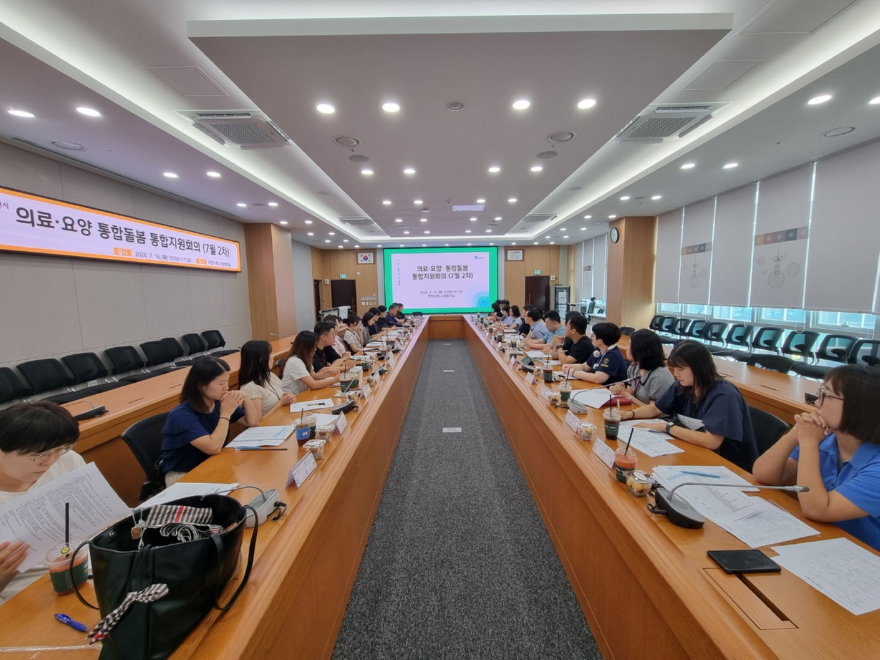
On July 16, 2026, Pocheon City convened its 13th Integrated Support Committee meeting of the year, gathering representatives from the National Health Insurance Service, municipal advisory groups, and contracted medical institutions. The municipality revealed that its integrated care framework—designed for senior citizens and severely disabled individuals struggling with daily life activities—has processed 192 case approvals, 109 plan modifications, and 1,033 service linkages since its transition to a directly managed public system. While these figures easily read as dry institutional metrics, they mask granular human realities: home medical visits, nutritional assistance, architectural modifications to prevent falls, and proactive preventative health monitoring.
The core innovation of integrated care resides not merely in the volume of services rendered, but in the seamless consolidation of historically fragmented administrative silos. When healthcare, social welfare, and housing assistance operate independently, the most vulnerable citizens inevitably slip into the gaps, paralyzed by the bureaucratic burden of navigating separate state apparatuses. For an ailing senior or a disabled resident, the sheer logistical friction of applying for aid becomes an insurmountable barrier. Effective municipal care must therefore prioritize the architecture of connection over the absolute total of resources. By diagnosing a resident’s health, physical autonomy, familial support, and housing safety under a single unified lens, the state can prescribe customized, real-time interventions.
◇ Preserving Livelihood Over Clinical Isolation
A breakdown of Pocheon’s current care linkages reveals a deliberate emphasis on daily livelihood preservation: daily life care led with 278 instances, followed by preventative health management (185), long-term institutional care (166), housing welfare infrastructure (158), health-medical interventions (121), and miscellaneous support services (125). This distribution underscores a critical axiom of public health: an elder’s survival cannot be sustained by clinical treatment alone. It requires a comprehensive ecosystem—retrofitting a home to prevent injuries, ensuring regular nutrition and sanitation, and seamlessly transitioning individuals into long-term welfare networks when necessary. Human life is stabilized not simply when a disease is treated, but when the continuity of daily existence is preserved.
In this respect, integrated care functions simultaneously as a social safety net and a foundational population strategy. This dynamic directly explains why Pocheon has tightly aligned its eldercare framework with its broader administrative restructuring, most notably the recent establishment of its dedicated Population Growth Bureau. Local governments navigating regional depopulation often misdiagnose the crisis as a superficial numbers game, dedicating outsized budgets to short-term childbirth incentives or performative campaigns to attract outsiders. The more existential demographic priority lies in stabilizing the current populace. If aging residents are systematically forced to abandon their homes for distant urban facilities due to a domestic care deficit, a city is already hollowed out from within. Conversely, securing the framework for residents to grow old in place is an act of regional preservation.
This imperative carries heightened urgency in an urban-rural complex like Pocheon. Here, rapid population aging collides with geographically dispersed medical infrastructure, deficient public transit networks, and the fraying of traditional familial safety nets. In such peripheral territories, the fiscal and moral mandate must shift from institutionalization to community resilience—prioritizing regional retention over hospitalization. The concept of "Aging in Place" ceases to be an academic ideal; it becomes a municipal necessity. The security of one's twilight years is dictated entirely by how tightly a city can interweave its medical, social, and residential networks.
◇ Moving Past Aggregated Outputs to Citizen Experience
However, empirical rigor dictates that public data must not be romanticized. Commending 1,033 service linkages does not mean every systemic vacuum has been sealed. The definitive audit of Pocheon's integrated care model must evaluate qualitative outcomes rather than superficial case tallies: Has the rate of preventable hospital readmissions declined? Has the psychological and financial exhaustion borne by caregivers decreased? Do the recipients themselves experience a palpable elevation in daily autonomy? While bureaucracy naturally counts inputs, the ultimate validity of social welfare lies in the subjective experience of the citizen. In this regard, the city's protocol of conducting quarterly post-service monitoring to adjust and refine individual support plans is highly laudable. Human precarity is fluid, and state intervention must adapt in tandem with the changing vulnerabilities of life.
To cement this framework as a lasting benchmark of regional governance, Pocheon must aggressively pursue four structural objectives moving forward:
First, it must empower grassroots frontline personnel at the township and neighborhood levels (읍면동), ensuring that hidden vulnerabilities are detected early.
Second, it must refine data synchronization and role calibration between the National Health Insurance Service, municipal welfare divisions, and regional health centers.
Third, it must systematically lower the administrative barriers to entry, recognizing that those in most desperate need of aid are often the least equipped to navigate state systems.
Fourth, the city must permanently shift its performance metrics from superficial output statistics to substantive quality-of-life indices.
Ultimately, integrated care is less a clinical methodology and more a reflection of civic philosophy. It is a codified promise that physical decline or disability will not strip a resident of their dignity or exile them from the community they helped build. A city's future cannot be charted by infrastructure outlays alone. The defining question for the modern era is no longer how many high-rises a municipality can construct, but how safely its oldest citizens can remain in their homes until the very end. Pocheon’s current trajectory offers a glimpse of that possibility. The mandate now is to convert statistical milestones into deep public trust, ensuring that every resident knows, with absolute certainty, that this city will not let them fall.
BEST 뉴스
-

경민고 총동문회 골프팀 SBS골프 고교골프최강전 4강 진출 쾌거 10월 13일 준결승 격돌
경민고 총동문회 골프팀 SBS골프 고교골프최강전 4강 진출 쾌거 10월 13일 준결승 격돌 경민고등학교 총동문회 골프팀이 SBS골프 고교골프최강전 8강전에서 승리를 거두며 당당히 4강 진출의 쾌거를 달성했다. 전국 각지의 명문 고교 동문들이 출전해 모교의 명예와 장학금을 걸고 맞붙... -

가을 정취 물들이는 허브아일랜드 관광객을 위한 음악회 성황
가을 정취 물들이는 허브아일랜드 관광객을 위한 음악회 성황 가수 김용국 김봉규 단장의 색소폰 연주 가수 화영,황용 등 다채로운 무대 선사 가을 정취를 더하는 허브아일랜드 관광객을 위한 음악회가 열려 방문객들의 큰 호응을 얻고 있다. 트리플에이픽쳐스와 허브아일랜드... -

글로벌문화교류연합회 MOU 협약식 및 임명장 수여식 국회서 17일 개최
글로벌문화교류연합회 MOU 협약식 및 임명장 수여식 국회서 17일 개최 글로벌문화교류연합회와 장경태 의원실이 공동으로 주최하는 글로벌 문화교류 및 상호협력 활성화를 위한 MOU 협약식 및 임명장 수여식이 다가오는 10월 17일 토요일 14시부터 17시까지 국회 제8간담회의실에서 성대하게 열린다. 글로벌... -

포천 허브아일랜드 핑크뮬리 축제와 야간개장으로 가을맞이 본격화
포천 허브아일랜드 핑크뮬리 축제와 야간개장으로 가을맞이 본격화 경기 포천시 대표 관광지인 허브아일랜드가 가을 시즌을 맞아 핑크뮬리 축제 개막과 함께 야간개장을 본격적으로 운영하며 방문객 맞이에 나섰다. 허브아일랜드는 지난 9월 19일부터 가을 대표 축제인 핑크뮬리 축제를 시작했다. 스카이 허... -

도쿄 번호판 달고 DMZ까지… 일본 경형 로드스터 고성 통일전망대 주차장 포착
도쿄 번호판 달고 DMZ까지… 일본 경형 로드스터 고성 통일전망대 주차장 포착 29일 오전 강원도 고성군 통일전망대 주차장에 일본 현지 번호판을 부착한 경형 오픈카 한 대가 주차되어 있어 관광객들의 눈길을 사로잡았다. 해당 차량은 일본 다이하츠 사의 2인승 경형 하드탑 컨버터블인 '코펜 세로' 모델로... -

제16회 계룡군문화축제 10월 1일 화려한 개막
제16회 계룡군문화축제 10월 1일 화려한 개막 대한민국 대표 군문화 축제인 제16회 계룡군문화축제가 오는 10월 1일부터 5일까지 5일간 계룡대 활주로 일대에서 펼쳐진다. 10월 1일 개막식은 오후 6시 30분 미8군 군악대 등의 식전공연을 시작으로 막을 올린다. 이어 오후 7시부터는 소향과 포레스텔라의...
전체댓글 0
실시간뉴스


![[헤드라인] 아시아 최초 림팩 연합사령관 임무 수행, 대한민국 해군 위상 드높인다](/data/news/202607/news_1783140948.1.jpg)

추천뉴스






의정부시
more +단체
more +-

금감원 공시 개편에 삼천당제약 ‘프로핏 쉐어’ 재평가… ‘진가’ 고개를 들다
금융감독원이 제약·바이오 기업의 공시 체계를 전면 개편하고 계약금과 마일스톤, 로열티 및 이익배분 ... -

포천 신북면 ‘포담장터’ 7월 11일 개장… 먹거리·공연·나눔밥상까지 풍성
경기 포천시 신북면에서 지역 주민과 관광객이 함께 즐길 수 있는 먹거리 장터가 열린다. 포천 신북면 ... -
![[메트로기획] 붓끝에 되살린 소동파의 철학](/data/news/202607/news_1783652004.1.jpg)
[메트로기획] 붓끝에 되살린 소동파의 철학
소동파(蘇軾)의 대표 산문 〈전적벽부(前赤壁賦)〉가 이종훈 포천문화원장의 필치로 대형 서예 작품으... -
![[메트로기획] 모수국과 무지랭이골에 대한 연구 ①](/data/news/202607/news_1783613916.1.jpg)
[메트로기획] 모수국과 무지랭이골에 대한 연구 ①
경기 의정부시 고산주민센터에서 진행하는 치매예방 프로그램 ‘웃음빵빵 두뇌짱짱’ 수업 시간이었다. ...
포토뉴스
more +-

90세 노모가 입혀준 붉은 점퍼 소통과 효심으로 그리는 포천의 미래
90세 노모가 입혀준 붉은 점퍼 소통과 효심으로 그리는 포천의 미래 정치인의 선거복은 흔히 당적을 상징하지만 백영현 포천시장 후보에게 붉은 점퍼는 그 이상의 특별한 의미를 지닌다. 최근 90세 노모가 아들에게 직접 선거 운동복을 입혀주는 모습이 포착되면서 지역 사회에 잔잔한 감동을 전하고 ... -

국민의힘, 포천 시의원 선거 ‘위기론’ 확산... 승부수는 ‘필승 전략공천’
국민의힘, 포천 시의원 선거 ‘위기론’ 확산... 승부수는 ‘필승 전략공천’ 가선거구 서과석·나선거구 안애경 전면 배치설... 박윤경 후보 비례대표 선회론도 ‘솔솔’ 오는 6월 3일 제9회 전국동시지방선거를 앞두고 포천 지역 국민의힘 진영 내에서 위기감이 고조되고 있다. 선거 판세가 안개 속으... -

임종훈 포천시의장, '험로' 무소속 시의원 3선 도전...
"포천 향한 진심으로 승부" 임종훈 포천시의회 의장이 다가오는 지방선거에서 포천시장 출마 대신 '무소속으로 시의원 3선 재도전'이라는 파격적인 행보를 결정하며 지역 정가의 이목을 집중시키고 있다.그동안 유력한 시장 후보군으로 거론되며 체급을 키워온 임 의장의 이번 결정은 정치적 영달을 위한 '높... -
가을 정취 물들이는 허브아일랜드 관광객을 위한 음악회 성황
가을 정취 물들이는 허브아일랜드 관광객을 위한 음악회 성황 가수 김용국 김봉규 단장의 색소폰 연주 가수 화영,황용 등 다채로운 무대 선사 가을 정취를 더하는 허브아일랜드 관광객을 위한 음악회가 열려 방문객들의 큰 호응을 얻고 있다. 트리플에이픽쳐스와 허브아일랜드가 주최 주관하고 포천...
