


- Awarded by Gyeonggi Province for its winter crisis management, the urban-rural municipality demonstrates that modern social safety nets must locate vulnerable citizens before tragedy strikes.
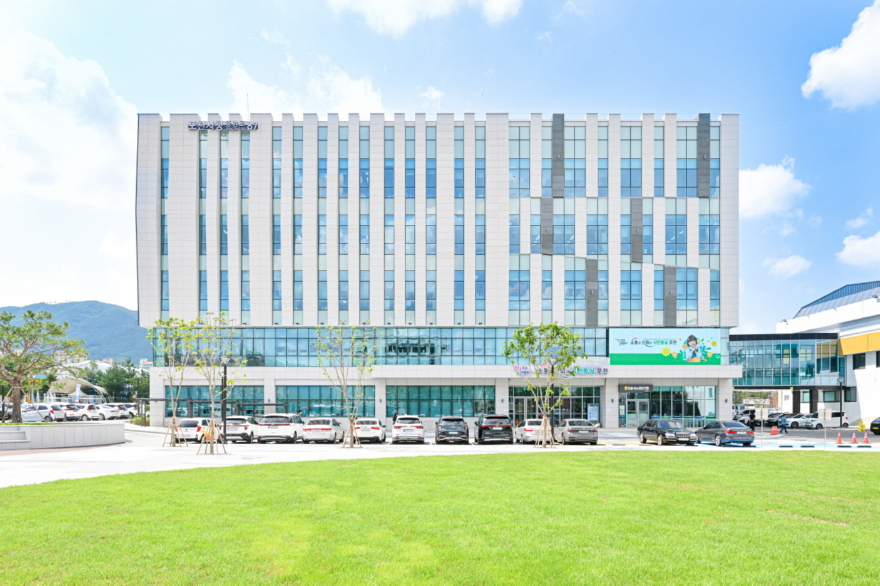
The true competence of a public welfare system is measured not by the sheer volume of its statutory frameworks, but by the precision and speed with which it identifies individuals on the precipice of ruin. Winter historically compounds these vulnerabilities, bringing a convergence of economic isolation, health crises, fuel precarity, and housing instability that aggressively tests the baseline structural integrity of local governance.
In this context, Pocheon City’s selection as an outstanding institution in Gyeonggi Province’s 2025–2026 Winter Welfare Crisis Household Identification and Support Evaluation carries weight far beyond a routine administrative accolade. It serves as an empirical demonstration of a critical sociological principle: that effective governance must operate as an engine of proactive discovery rather than a passive mechanism of post-crisis relief.
According to municipal disclosures, Pocheon is slated to receive an official institutional citation from the Governor of Gyeonggi Province this upcoming August, alongside individual commendations for the civil servants and civic leaders who engineered the winter campaign. Beneath the celebratory veneer of this announcement lies an unvarnished administrative reality. In an era marked by deep economic fragmentation, a welfare apparatus that simply waits for the disenfranchised to approach a municipal window and file an application is structurally deficient. Those experiencing the most acute crises are frequently the least equipped to navigate state bureaucracies, often lacking the social capital or physical capability to signal their distress. Welfare achieves systemic utility only when it transitions from an intake office into an active, searching network.
Bridging Data Analytics with Shoe-Leather Bureaucracy
The Gyeonggi evaluation, anchored fundamentally in the Gyeonggi Province Ordinance on Support for Identifying Neighbors in Crisis, scrutinized multi-layered indices including regional 사각지대 (welfare blind spots) discovery metrics, localized public-private partnerships, and the net efficacy of crisis resolution.
Pocheon secured its top-tier evaluation by executing a dual-track strategy that balanced big-data forecasting with physical civic mobilization. The municipality leveraged the Ministry of Health and Welfare’s predictive data systems to flag households showing compound indicators of financial stress, utility delinquencies, or medical isolation. These algorithmic red flags were then handed down to localized field networks, including:
14 township and neighborhood administrative units (읍면동)
Honorary social welfare public servants
Local community security committees and village leadership networks (이장단)
This deliberate combination of technological macro-targeting and neighborhood micro-surveillance highlights the modern reality of social care: data matrices can map vulnerabilities, but it requires human presence to read the unvarnished reality of a household's suffering.
The Existential Demographic Prerequisite
For an urban-rural complex like Pocheon, managing these hidden domestic crises dictates the literal survival of the territory. The city, which recently established a dedicated Population Growth Bureau to counteract severe regional depopulation, recognizes that sustainable demographic health cannot be achieved solely through external recruitment campaigns or short-term childbirth subsidies. True regional resilience begins by stabilizing the residents who already anchor the community. In a territory where rapid aging and economic precarity frequently overlap within a single household, winter crisis mitigation ceases to be a seasonal charitable project; it becomes a foundational demographic strategy. Livability is not generated by sprawling infrastructure blueprints alone; it is earned by ensuring no resident is left to freeze in isolation.
he Path to Institutional Sustainability
However, public accolades must not be consumed as final victories; they must serve as diagnostic baselines for long-term reform. A social safety net that functions with heightened urgency only when the temperature drops is inherently incomplete. Human precarity does not observe the calendar; the passage of a cold front does not automatically dissolve systemic poverty, housing precarity, or childcare deficits.
To transform this seasonal success into a permanent civic safeguard, Pocheon's leadership must navigate four distinct institutional challenges moving forward:
Ethical Data Governance: Crisis identification must strictly respect individual privacy rights, ensuring that data-driven interventions do not inadvertently manifest as invasive state surveillance or create social stigmatization.
Calibrated Co-Governance: Public-private partnerships must evolve beyond the temporary mobilization of civic volunteers, transitioning instead into permanent frameworks where authority, resources, and administrative liabilities are genuinely shared.
Structural Autonomy: Immediate cash or material transfers must serve strictly as short-term stabilizers, seamlessly linking recipients to long-term avenues for economic autonomy, employment re-integration, and community connection.
Qualitative Auditing: Performance metrics must permanently shift from aggregate, quantitative counts of households processed to qualitative evaluations of structural crises averted.
Municipal authorities correctly observed that the city's winter performance was "a valuable outcome forged through the heightened sensitivity and synchronized efforts of civil society." The state, acting alone, possesses neither the eyes nor the ears to seal every crack in the social fabric. The ultimate viability of local governance relies entirely on the density of its grassroots networks—how sharply a neighborhood reads the silent alarms of its inhabitants and how rapidly the administration responds. Pocheon has demonstrated that it can turn on the system during a freeze; it must now prove it can keep the network running in all seasons.
BEST 뉴스
-

경민고 총동문회 골프팀 SBS골프 고교골프최강전 4강 진출 쾌거 10월 13일 준결승 격돌
경민고 총동문회 골프팀 SBS골프 고교골프최강전 4강 진출 쾌거 10월 13일 준결승 격돌 경민고등학교 총동문회 골프팀이 SBS골프 고교골프최강전 8강전에서 승리를 거두며 당당히 4강 진출의 쾌거를 달성했다. 전국 각지의 명문 고교 동문들이 출전해 모교의 명예와 장학금을 걸고 맞붙... -

가을 정취 물들이는 허브아일랜드 관광객을 위한 음악회 성황
가을 정취 물들이는 허브아일랜드 관광객을 위한 음악회 성황 가수 김용국 김봉규 단장의 색소폰 연주 가수 화영,황용 등 다채로운 무대 선사 가을 정취를 더하는 허브아일랜드 관광객을 위한 음악회가 열려 방문객들의 큰 호응을 얻고 있다. 트리플에이픽쳐스와 허브아일랜드... -

글로벌문화교류연합회 MOU 협약식 및 임명장 수여식 국회서 17일 개최
글로벌문화교류연합회 MOU 협약식 및 임명장 수여식 국회서 17일 개최 글로벌문화교류연합회와 장경태 의원실이 공동으로 주최하는 글로벌 문화교류 및 상호협력 활성화를 위한 MOU 협약식 및 임명장 수여식이 다가오는 10월 17일 토요일 14시부터 17시까지 국회 제8간담회의실에서 성대하게 열린다. 글로벌... -

포천 허브아일랜드 핑크뮬리 축제와 야간개장으로 가을맞이 본격화
포천 허브아일랜드 핑크뮬리 축제와 야간개장으로 가을맞이 본격화 경기 포천시 대표 관광지인 허브아일랜드가 가을 시즌을 맞아 핑크뮬리 축제 개막과 함께 야간개장을 본격적으로 운영하며 방문객 맞이에 나섰다. 허브아일랜드는 지난 9월 19일부터 가을 대표 축제인 핑크뮬리 축제를 시작했다. 스카이 허... -

제16회 계룡군문화축제 10월 1일 화려한 개막
제16회 계룡군문화축제 10월 1일 화려한 개막 대한민국 대표 군문화 축제인 제16회 계룡군문화축제가 오는 10월 1일부터 5일까지 5일간 계룡대 활주로 일대에서 펼쳐진다. 10월 1일 개막식은 오후 6시 30분 미8군 군악대 등의 식전공연을 시작으로 막을 올린다. 이어 오후 7시부터는 소향과 포레스텔라의... -

도쿄 번호판 달고 DMZ까지… 일본 경형 로드스터 고성 통일전망대 주차장 포착
도쿄 번호판 달고 DMZ까지… 일본 경형 로드스터 고성 통일전망대 주차장 포착 29일 오전 강원도 고성군 통일전망대 주차장에 일본 현지 번호판을 부착한 경형 오픈카 한 대가 주차되어 있어 관광객들의 눈길을 사로잡았다. 해당 차량은 일본 다이하츠 사의 2인승 경형 하드탑 컨버터블인 '코펜 세로' 모델로...
전체댓글 0
실시간뉴스


![[헤드라인] 아시아 최초 림팩 연합사령관 임무 수행, 대한민국 해군 위상 드높인다](/data/news/202607/news_1783140948.1.jpg)

추천뉴스






의정부시
more +단체
more +-

금감원 공시 개편에 삼천당제약 ‘프로핏 쉐어’ 재평가… ‘진가’ 고개를 들다
금융감독원이 제약·바이오 기업의 공시 체계를 전면 개편하고 계약금과 마일스톤, 로열티 및 이익배분 ... -

포천 신북면 ‘포담장터’ 7월 11일 개장… 먹거리·공연·나눔밥상까지 풍성
경기 포천시 신북면에서 지역 주민과 관광객이 함께 즐길 수 있는 먹거리 장터가 열린다. 포천 신북면 ... -
![[메트로기획] 붓끝에 되살린 소동파의 철학](/data/news/202607/news_1783652004.1.jpg)
[메트로기획] 붓끝에 되살린 소동파의 철학
소동파(蘇軾)의 대표 산문 〈전적벽부(前赤壁賦)〉가 이종훈 포천문화원장의 필치로 대형 서예 작품으... -
![[메트로기획] 모수국과 무지랭이골에 대한 연구 ①](/data/news/202607/news_1783613916.1.jpg)
[메트로기획] 모수국과 무지랭이골에 대한 연구 ①
경기 의정부시 고산주민센터에서 진행하는 치매예방 프로그램 ‘웃음빵빵 두뇌짱짱’ 수업 시간이었다. ...
포토뉴스
more +-

90세 노모가 입혀준 붉은 점퍼 소통과 효심으로 그리는 포천의 미래
90세 노모가 입혀준 붉은 점퍼 소통과 효심으로 그리는 포천의 미래 정치인의 선거복은 흔히 당적을 상징하지만 백영현 포천시장 후보에게 붉은 점퍼는 그 이상의 특별한 의미를 지닌다. 최근 90세 노모가 아들에게 직접 선거 운동복을 입혀주는 모습이 포착되면서 지역 사회에 잔잔한 감동을 전하고 ... -

국민의힘, 포천 시의원 선거 ‘위기론’ 확산... 승부수는 ‘필승 전략공천’
국민의힘, 포천 시의원 선거 ‘위기론’ 확산... 승부수는 ‘필승 전략공천’ 가선거구 서과석·나선거구 안애경 전면 배치설... 박윤경 후보 비례대표 선회론도 ‘솔솔’ 오는 6월 3일 제9회 전국동시지방선거를 앞두고 포천 지역 국민의힘 진영 내에서 위기감이 고조되고 있다. 선거 판세가 안개 속으... -

임종훈 포천시의장, '험로' 무소속 시의원 3선 도전...
"포천 향한 진심으로 승부" 임종훈 포천시의회 의장이 다가오는 지방선거에서 포천시장 출마 대신 '무소속으로 시의원 3선 재도전'이라는 파격적인 행보를 결정하며 지역 정가의 이목을 집중시키고 있다.그동안 유력한 시장 후보군으로 거론되며 체급을 키워온 임 의장의 이번 결정은 정치적 영달을 위한 '높... -
가을 정취 물들이는 허브아일랜드 관광객을 위한 음악회 성황
가을 정취 물들이는 허브아일랜드 관광객을 위한 음악회 성황 가수 김용국 김봉규 단장의 색소폰 연주 가수 화영,황용 등 다채로운 무대 선사 가을 정취를 더하는 허브아일랜드 관광객을 위한 음악회가 열려 방문객들의 큰 호응을 얻고 있다. 트리플에이픽쳐스와 허브아일랜드가 주최 주관하고 포천...
