


- Pocheon City’s localized distribution of basic kitchenware demonstrates that demographic resilience is built not on grand rhetoric, but on protecting the dignity of daily life.
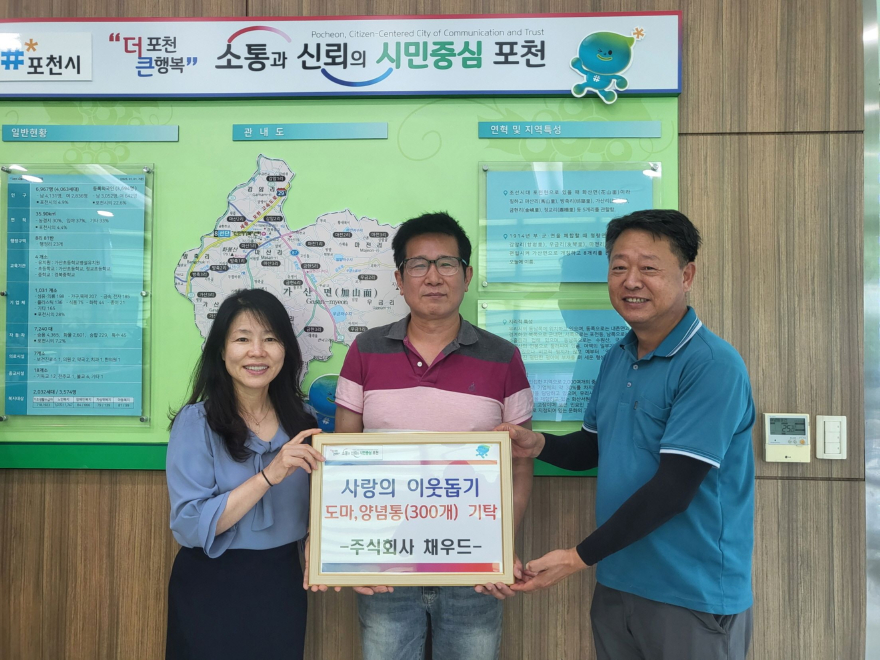
Social welfare is routinely quantified through aggregate metrics—total budgetary outlays, the volume of households processed, or the enactment of sweeping statutory frameworks. Yet, human precarity often manifests in much smaller, unvarnished spaces. A warped cutting board, a degraded seasoning container, or the quiet absence of functional kitchenware can dictate the boundary line between domestic autonomy and systemic exhaustion. Gasan-myeon’s recent acquisition of specialized kitchen supplies from Chaewood, a local distributor, functions as far more than a routine corporate donation; it reveals how deeply municipal care must descend into the micro-details of daily life to be genuinely effective.
On July 16, 2026, the Gasan-myeon Administrative Welfare Center announced it had received 200 camping cutting boards and 100 seasoning containers from Chaewood. These items are slated for sequential distribution to vulnerable demographics, including isolated senior citizens, low-income households, and recipients of basic livelihood security who require immediate kitchen environment overhauls. While the transaction appears modest on a fiscal ledger, the systematic utility of welfare is rarely determined by scale alone. Success hinges instead on how precisely the state and civil society can diagnose and alleviate the specific fractures within an individual household.
Within the framework of social care, the preservation of domestic utility carries profound symbolic weight. Nutrition represents not only a baseline biological necessity but a primary axis of human dignity. When the space dedicated to preparing daily sustenance becomes structurally degraded or unsanitary, the resulting friction accumulates as chronic physical and psychological fatigue. For isolated elderly residents or disenfranchised households lacking robust care networks, these minor household deficits rapidly compound. Consequently, basic implements like cutting boards and storage containers are not mere domestic conveniences; they serve as the literal infrastructure supporting sanitation, safety, and self-worth at the grassroots level.
The efficacy of Gasan-myeon’s intervention relies on its utilization of granular vulnerability data to track households requiring micro-level support. Exceptional governance rejects standardized, aggregate distributions in favor of customized, needs-based calibration. While one household may require structural residential repairs, another may achieve an immediate elevation in life quality through the simple replacement of everyday tools. Crucially, the township plans to cross-reference this distribution process with the city's ongoing resident registration fact-finding audit, utilizing the physical delivery of goods as a strategic entry point to audit broader living conditions, uncover hidden care deficits, and monitor isolated residents.
This micro-targeted approach aligns seamlessly with Pocheon City’s broader administrative restructuring, including its recent establishment of a dedicated Population Growth Bureau aimed at upgrading regional living conditions. Local governments navigating severe regional depopulation often misdiagnose the crisis, pouring resources into short-term childbirth subsidies or external recruitment campaigns. The more existential demographic priority lies in stabilizing the current populace by reducing the precarity of daily life. In an urban-rural complex where social alienation and hidden poverty are geographically dispersed, localized, livelihood-centered welfare acts as the primary defensive line against population flight.
Nevertheless, public policy analysts caution that corporate philanthropy must not be treated as a permanent substitute for robust state funding. While private sector contributions provide vital flexibility to plug immediate administrative gaps, the structural integrity of social welfare must always be anchored by municipal budgets and statutory accountability. The mandate for local governance is to ensure these private resources are seamlessly and equitably integrated into the public safety net. Reflecting on this cooperative model, Chaewood CEO Kim Jun-hoe remarked, "We designed these products for effortless, reliable daily utility, understanding that small changes in a kitchen can profoundly stabilize a household's daily rhythm."
Ultimately, outstanding social welfare is defined by precision rather than grandiosity—ensuring the exact resource reaches the exact individual at the precise moment of need. The collaboration between Gasan-myeon and Chaewood serves as a subtle reminder that local governance is judged by its attention to detail. A state cannot build a resilient community by focusing solely on macro-level indicators. Sometimes, the restoration of human dignity and regional stability begins in the quietest corner of the home, by replacing a worn cutting board on a kitchen counter.
BEST 뉴스
-

경민고 총동문회 골프팀 SBS골프 고교골프최강전 4강 진출 쾌거 10월 13일 준결승 격돌
경민고 총동문회 골프팀 SBS골프 고교골프최강전 4강 진출 쾌거 10월 13일 준결승 격돌 경민고등학교 총동문회 골프팀이 SBS골프 고교골프최강전 8강전에서 승리를 거두며 당당히 4강 진출의 쾌거를 달성했다. 전국 각지의 명문 고교 동문들이 출전해 모교의 명예와 장학금을 걸고 맞붙... -

가을 정취 물들이는 허브아일랜드 관광객을 위한 음악회 성황
가을 정취 물들이는 허브아일랜드 관광객을 위한 음악회 성황 가수 김용국 김봉규 단장의 색소폰 연주 가수 화영,황용 등 다채로운 무대 선사 가을 정취를 더하는 허브아일랜드 관광객을 위한 음악회가 열려 방문객들의 큰 호응을 얻고 있다. 트리플에이픽쳐스와 허브아일랜드... -

글로벌문화교류연합회 MOU 협약식 및 임명장 수여식 국회서 17일 개최
글로벌문화교류연합회 MOU 협약식 및 임명장 수여식 국회서 17일 개최 글로벌문화교류연합회와 장경태 의원실이 공동으로 주최하는 글로벌 문화교류 및 상호협력 활성화를 위한 MOU 협약식 및 임명장 수여식이 다가오는 10월 17일 토요일 14시부터 17시까지 국회 제8간담회의실에서 성대하게 열린다. 글로벌... -

포천 허브아일랜드 핑크뮬리 축제와 야간개장으로 가을맞이 본격화
포천 허브아일랜드 핑크뮬리 축제와 야간개장으로 가을맞이 본격화 경기 포천시 대표 관광지인 허브아일랜드가 가을 시즌을 맞아 핑크뮬리 축제 개막과 함께 야간개장을 본격적으로 운영하며 방문객 맞이에 나섰다. 허브아일랜드는 지난 9월 19일부터 가을 대표 축제인 핑크뮬리 축제를 시작했다. 스카이 허... -

도쿄 번호판 달고 DMZ까지… 일본 경형 로드스터 고성 통일전망대 주차장 포착
도쿄 번호판 달고 DMZ까지… 일본 경형 로드스터 고성 통일전망대 주차장 포착 29일 오전 강원도 고성군 통일전망대 주차장에 일본 현지 번호판을 부착한 경형 오픈카 한 대가 주차되어 있어 관광객들의 눈길을 사로잡았다. 해당 차량은 일본 다이하츠 사의 2인승 경형 하드탑 컨버터블인 '코펜 세로' 모델로... -

제16회 계룡군문화축제 10월 1일 화려한 개막
제16회 계룡군문화축제 10월 1일 화려한 개막 대한민국 대표 군문화 축제인 제16회 계룡군문화축제가 오는 10월 1일부터 5일까지 5일간 계룡대 활주로 일대에서 펼쳐진다. 10월 1일 개막식은 오후 6시 30분 미8군 군악대 등의 식전공연을 시작으로 막을 올린다. 이어 오후 7시부터는 소향과 포레스텔라의...
전체댓글 0
실시간뉴스


![[헤드라인] 아시아 최초 림팩 연합사령관 임무 수행, 대한민국 해군 위상 드높인다](/data/news/202607/news_1783140948.1.jpg)

추천뉴스






의정부시
more +단체
more +-

금감원 공시 개편에 삼천당제약 ‘프로핏 쉐어’ 재평가… ‘진가’ 고개를 들다
금융감독원이 제약·바이오 기업의 공시 체계를 전면 개편하고 계약금과 마일스톤, 로열티 및 이익배분 ... -

포천 신북면 ‘포담장터’ 7월 11일 개장… 먹거리·공연·나눔밥상까지 풍성
경기 포천시 신북면에서 지역 주민과 관광객이 함께 즐길 수 있는 먹거리 장터가 열린다. 포천 신북면 ... -
![[메트로기획] 붓끝에 되살린 소동파의 철학](/data/news/202607/news_1783652004.1.jpg)
[메트로기획] 붓끝에 되살린 소동파의 철학
소동파(蘇軾)의 대표 산문 〈전적벽부(前赤壁賦)〉가 이종훈 포천문화원장의 필치로 대형 서예 작품으... -
![[메트로기획] 모수국과 무지랭이골에 대한 연구 ①](/data/news/202607/news_1783613916.1.jpg)
[메트로기획] 모수국과 무지랭이골에 대한 연구 ①
경기 의정부시 고산주민센터에서 진행하는 치매예방 프로그램 ‘웃음빵빵 두뇌짱짱’ 수업 시간이었다. ...
포토뉴스
more +-

90세 노모가 입혀준 붉은 점퍼 소통과 효심으로 그리는 포천의 미래
90세 노모가 입혀준 붉은 점퍼 소통과 효심으로 그리는 포천의 미래 정치인의 선거복은 흔히 당적을 상징하지만 백영현 포천시장 후보에게 붉은 점퍼는 그 이상의 특별한 의미를 지닌다. 최근 90세 노모가 아들에게 직접 선거 운동복을 입혀주는 모습이 포착되면서 지역 사회에 잔잔한 감동을 전하고 ... -

국민의힘, 포천 시의원 선거 ‘위기론’ 확산... 승부수는 ‘필승 전략공천’
국민의힘, 포천 시의원 선거 ‘위기론’ 확산... 승부수는 ‘필승 전략공천’ 가선거구 서과석·나선거구 안애경 전면 배치설... 박윤경 후보 비례대표 선회론도 ‘솔솔’ 오는 6월 3일 제9회 전국동시지방선거를 앞두고 포천 지역 국민의힘 진영 내에서 위기감이 고조되고 있다. 선거 판세가 안개 속으... -

임종훈 포천시의장, '험로' 무소속 시의원 3선 도전...
"포천 향한 진심으로 승부" 임종훈 포천시의회 의장이 다가오는 지방선거에서 포천시장 출마 대신 '무소속으로 시의원 3선 재도전'이라는 파격적인 행보를 결정하며 지역 정가의 이목을 집중시키고 있다.그동안 유력한 시장 후보군으로 거론되며 체급을 키워온 임 의장의 이번 결정은 정치적 영달을 위한 '높... -
가을 정취 물들이는 허브아일랜드 관광객을 위한 음악회 성황
가을 정취 물들이는 허브아일랜드 관광객을 위한 음악회 성황 가수 김용국 김봉규 단장의 색소폰 연주 가수 화영,황용 등 다채로운 무대 선사 가을 정취를 더하는 허브아일랜드 관광객을 위한 음악회가 열려 방문객들의 큰 호응을 얻고 있다. 트리플에이픽쳐스와 허브아일랜드가 주최 주관하고 포천...
