


- Pocheon Saemaul Bureau’s seasonal food distribution highlights the critical intersection of civic volunteerism and municipal safety nets in safeguarding vulnerable populations from heatwave-induced isolation.
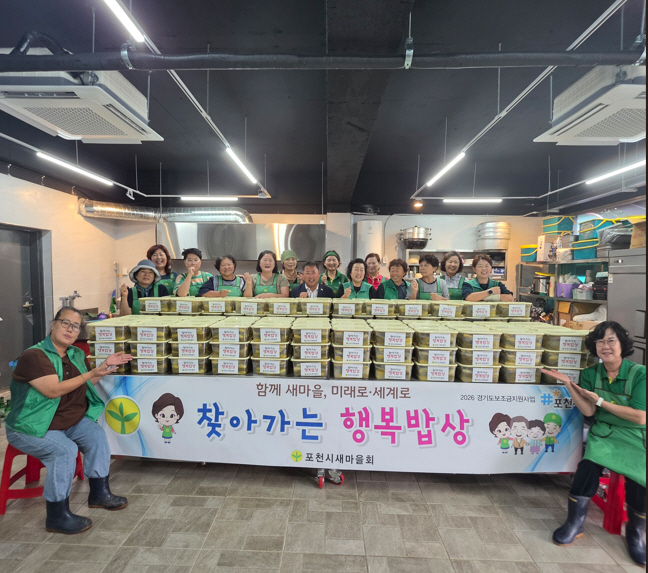
Social welfare is rarely completed by the mere titles of grand institutions. During the peak of summer, the survival of vulnerable demographics is determined not only by access to air conditioning or medical interventions, but by how they sustain their daily meals. When exhausting heat depletes physical vitality, dietary habits rapidly deteriorate, accelerating the decline of overall health. For isolated senior citizens and low-income households, this vicious cycle intensifies with alarming velocity. In this light, the recent cucumber pickle (oiji) preparation and distribution campaign spearheaded by the Pocheon Saemaul Bureau transcends routine seasonal volunteerism. It serves as an empirical reminder that if welfare is to genuinely impact daily existence, it must ultimately descend to the citizen's dining table.
On July 15, 2026, the Pocheon Saemaul Bureau convened its second "Happy Dining Table" initiative at the Saemaul Hall. Led by Lee Jeong-sun, president of the Pocheon Saemaul Women's Bureau, leaders from 14 townships and neighborhoods directly prepared the traditional summer dish. The following day, the supplies were systematically channeled through the tailored welfare networks of localized administrative centers to reach isolated elderly residents and low-income families. Superficially, the event reads as a modest charitable gathering. Yet, such grassroots endeavors carry profound structural weight. The ultimate efficacy of a social safety net is frequently measured not by macro-level allocations, but by how tangibly a neighbor's next meal is stripped of precarity.
Within the context of Korean domestic life, oiji functions as a deeply symbolic culinary staple. During intense summer heatwaves, when loss of appetite is common, it offers an accessible, nutrient-dense, and shelf-stable dietary anchor. While far from a luxury health supplement, such basic side dishes are often what a vulnerable household requires most urgently. The nutritional crises of disenfranchised demographics are frequently analyzed through abstract caloric matrices, but the reality of daily sustenance is infinitely more concrete. When a lack of proper provisions leads to skipped meals or nutrient deficiencies, physical resilience rapidly erodes. Consequently, localized food distribution ceases to be a simple act of charity; it operates as a vital preventive measure designed to mitigate seasonal environmental hazards.
The systematic significance of this initiative is further amplified by the deliberate integration of civic volunteerism with the municipal administrative apparatus. While honorable charitable efforts are abundant, translating human goodwill into actionable public welfare requires a tightly calibrated distribution network. The fact that the bureau’s culinary output was routed directly through the tailored welfare grids of township administrative offices is critical. The private sector generates the initial communal warmth, while the public state organizes the logistics to ensure that energy is not dissipated. Social welfare achieves its maximum utility when civic organizations and formal administrative systems act as synchronized partners.
This collaborative model aligns seamlessly with Pocheon City’s broader administrative priorities, including the recent establishment of its dedicated Population Growth Bureau aimed at upgrading regional living conditions. Local governments often misdiagnose demographic resilience as a macro-level problem solved exclusively by sprawling infrastructure outlays or external recruitment campaigns. In reality, population retention is dictated by the quiet, micro-details of daily security—whether a community notices when an isolated resident falls ill, succumbs to extreme heat, or slips into severe alienation. In an urban-rural complex like Pocheon, where vulnerable demographics are geographically dispersed and highly exposed to climate precarity, an active human network functions as an indispensable defensive shield, sealing the cracks that formal state bureaucracies cannot reach.
However, rigorous policy analysis dictates that civic philanthropy must never be used to absolve the state of its statutory obligations. Paradoxically, the chronic necessity of such private interventions serves as an indictment, revealing the persistent gaps where institutional frameworks fail to penetrate the deepest corners of daily life. The seasonal survival of vulnerable citizens cannot be left to depend permanently on the benevolence of food donations. A truly resilient heatwave response mechanism requires the synchronized execution of utility subsidies, proactive health monitoring, food safety protocols, and long-term care integration. While civic goodwill fosters social cohesion, it cannot serve as a structural replacement for dedicated public budgets.
Therefore, municipal leaders must resist the temptation to consume these initiatives as transient, feel-good anomalies. The critical mandate moving forward is to standardize the identification of heat-vulnerable individuals, audit the authentic nutritional status of isolated seniors, and refine data-sharing protocols between administrative centers and civic groups. Food distribution must transcend its immediate material output, serving instead as a diagnostic entry point to audit the physical health and social isolation of the recipient. When the delivery of a meal functions simultaneously as a welfare check—uncovering hidden health deficits or structural vulnerabilities—the "Happy Dining Table" acquires genuine institutional weight.
Reflecting on this operational philosophy, Lee Bu-seong, president of the Pocheon Saemaul Bureau, noted that even a modest culinary addition can stabilize a household’s daily rhythm during a crisis. True welfare is won or lost in these micro-interventions, where the timing and execution of aid dictate its transformative value. Similarly, the emphasis placed by Women's Bureau President Lee Jeong-sun on prioritizing the unseen vulnerabilities of one's neighbors underscores a baseline civic truth: welfare blind spots are generated not merely by missing laws, but when society dismisses minor domestic deficits as trivial. Extreme heat is a universal meteorological event, but its impact is deeply unequal—manifesting as a temporary discomfort for the affluent, and a matter of literal survival for the marginalized.
Ultimately, the cucumber pickle initiative in Pocheon is far more than a routine human-interest story. It stands as an empirical answer to a profound structural question: whose lives does a community prioritize when the environment becomes hostile? For Pocheon to genuinely validate its claims of enhanced livability, it must ensure that these micro-structures of care are granted long-term sustainability. A welfare system that descends directly to the dining table, checks on the isolated, and binds the state to civil society is the minimum requirement for a resilient city.
BEST 뉴스
-

경민고 총동문회 골프팀 SBS골프 고교골프최강전 4강 진출 쾌거 10월 13일 준결승 격돌
경민고 총동문회 골프팀 SBS골프 고교골프최강전 4강 진출 쾌거 10월 13일 준결승 격돌 경민고등학교 총동문회 골프팀이 SBS골프 고교골프최강전 8강전에서 승리를 거두며 당당히 4강 진출의 쾌거를 달성했다. 전국 각지의 명문 고교 동문들이 출전해 모교의 명예와 장학금을 걸고 맞붙... -

가을 정취 물들이는 허브아일랜드 관광객을 위한 음악회 성황
가을 정취 물들이는 허브아일랜드 관광객을 위한 음악회 성황 가수 김용국 김봉규 단장의 색소폰 연주 가수 화영,황용 등 다채로운 무대 선사 가을 정취를 더하는 허브아일랜드 관광객을 위한 음악회가 열려 방문객들의 큰 호응을 얻고 있다. 트리플에이픽쳐스와 허브아일랜드... -

글로벌문화교류연합회 MOU 협약식 및 임명장 수여식 국회서 17일 개최
글로벌문화교류연합회 MOU 협약식 및 임명장 수여식 국회서 17일 개최 글로벌문화교류연합회와 장경태 의원실이 공동으로 주최하는 글로벌 문화교류 및 상호협력 활성화를 위한 MOU 협약식 및 임명장 수여식이 다가오는 10월 17일 토요일 14시부터 17시까지 국회 제8간담회의실에서 성대하게 열린다. 글로벌... -

포천 허브아일랜드 핑크뮬리 축제와 야간개장으로 가을맞이 본격화
포천 허브아일랜드 핑크뮬리 축제와 야간개장으로 가을맞이 본격화 경기 포천시 대표 관광지인 허브아일랜드가 가을 시즌을 맞아 핑크뮬리 축제 개막과 함께 야간개장을 본격적으로 운영하며 방문객 맞이에 나섰다. 허브아일랜드는 지난 9월 19일부터 가을 대표 축제인 핑크뮬리 축제를 시작했다. 스카이 허... -

제16회 계룡군문화축제 10월 1일 화려한 개막
제16회 계룡군문화축제 10월 1일 화려한 개막 대한민국 대표 군문화 축제인 제16회 계룡군문화축제가 오는 10월 1일부터 5일까지 5일간 계룡대 활주로 일대에서 펼쳐진다. 10월 1일 개막식은 오후 6시 30분 미8군 군악대 등의 식전공연을 시작으로 막을 올린다. 이어 오후 7시부터는 소향과 포레스텔라의... -

도쿄 번호판 달고 DMZ까지… 일본 경형 로드스터 고성 통일전망대 주차장 포착
도쿄 번호판 달고 DMZ까지… 일본 경형 로드스터 고성 통일전망대 주차장 포착 29일 오전 강원도 고성군 통일전망대 주차장에 일본 현지 번호판을 부착한 경형 오픈카 한 대가 주차되어 있어 관광객들의 눈길을 사로잡았다. 해당 차량은 일본 다이하츠 사의 2인승 경형 하드탑 컨버터블인 '코펜 세로' 모델로...
전체댓글 0
실시간뉴스


![[헤드라인] 아시아 최초 림팩 연합사령관 임무 수행, 대한민국 해군 위상 드높인다](/data/news/202607/news_1783140948.1.jpg)

추천뉴스






의정부시
more +단체
more +-

금감원 공시 개편에 삼천당제약 ‘프로핏 쉐어’ 재평가… ‘진가’ 고개를 들다
금융감독원이 제약·바이오 기업의 공시 체계를 전면 개편하고 계약금과 마일스톤, 로열티 및 이익배분 ... -

포천 신북면 ‘포담장터’ 7월 11일 개장… 먹거리·공연·나눔밥상까지 풍성
경기 포천시 신북면에서 지역 주민과 관광객이 함께 즐길 수 있는 먹거리 장터가 열린다. 포천 신북면 ... -
![[메트로기획] 붓끝에 되살린 소동파의 철학](/data/news/202607/news_1783652004.1.jpg)
[메트로기획] 붓끝에 되살린 소동파의 철학
소동파(蘇軾)의 대표 산문 〈전적벽부(前赤壁賦)〉가 이종훈 포천문화원장의 필치로 대형 서예 작품으... -
![[메트로기획] 모수국과 무지랭이골에 대한 연구 ①](/data/news/202607/news_1783613916.1.jpg)
[메트로기획] 모수국과 무지랭이골에 대한 연구 ①
경기 의정부시 고산주민센터에서 진행하는 치매예방 프로그램 ‘웃음빵빵 두뇌짱짱’ 수업 시간이었다. ...
포토뉴스
more +-

90세 노모가 입혀준 붉은 점퍼 소통과 효심으로 그리는 포천의 미래
90세 노모가 입혀준 붉은 점퍼 소통과 효심으로 그리는 포천의 미래 정치인의 선거복은 흔히 당적을 상징하지만 백영현 포천시장 후보에게 붉은 점퍼는 그 이상의 특별한 의미를 지닌다. 최근 90세 노모가 아들에게 직접 선거 운동복을 입혀주는 모습이 포착되면서 지역 사회에 잔잔한 감동을 전하고 ... -

국민의힘, 포천 시의원 선거 ‘위기론’ 확산... 승부수는 ‘필승 전략공천’
국민의힘, 포천 시의원 선거 ‘위기론’ 확산... 승부수는 ‘필승 전략공천’ 가선거구 서과석·나선거구 안애경 전면 배치설... 박윤경 후보 비례대표 선회론도 ‘솔솔’ 오는 6월 3일 제9회 전국동시지방선거를 앞두고 포천 지역 국민의힘 진영 내에서 위기감이 고조되고 있다. 선거 판세가 안개 속으... -

임종훈 포천시의장, '험로' 무소속 시의원 3선 도전...
"포천 향한 진심으로 승부" 임종훈 포천시의회 의장이 다가오는 지방선거에서 포천시장 출마 대신 '무소속으로 시의원 3선 재도전'이라는 파격적인 행보를 결정하며 지역 정가의 이목을 집중시키고 있다.그동안 유력한 시장 후보군으로 거론되며 체급을 키워온 임 의장의 이번 결정은 정치적 영달을 위한 '높... -
가을 정취 물들이는 허브아일랜드 관광객을 위한 음악회 성황
가을 정취 물들이는 허브아일랜드 관광객을 위한 음악회 성황 가수 김용국 김봉규 단장의 색소폰 연주 가수 화영,황용 등 다채로운 무대 선사 가을 정취를 더하는 허브아일랜드 관광객을 위한 음악회가 열려 방문객들의 큰 호응을 얻고 있다. 트리플에이픽쳐스와 허브아일랜드가 주최 주관하고 포천...
