


- Seondan-dong’s localized longevity initiative demonstrates that regional resilience relies on transforming eldercare from passive state protection into active civic visibility.
In a hyper-aging society, the defining metric of civic success is no longer the mere elongation of average life expectancy. A far more existential question confronts modern municipalities: How can citizens age with a sense of dignity, insulated from loneliness, and deeply interwoven into the social fabric? Living long and aging well are fundamentally distinct concepts. In urban-rural complexes where geographic isolation easily hardens into a daily reality, the social sphere of the elderly can contract with alarming velocity. When children move away and physical mobility declines, isolation becomes an unspoken epidemic.
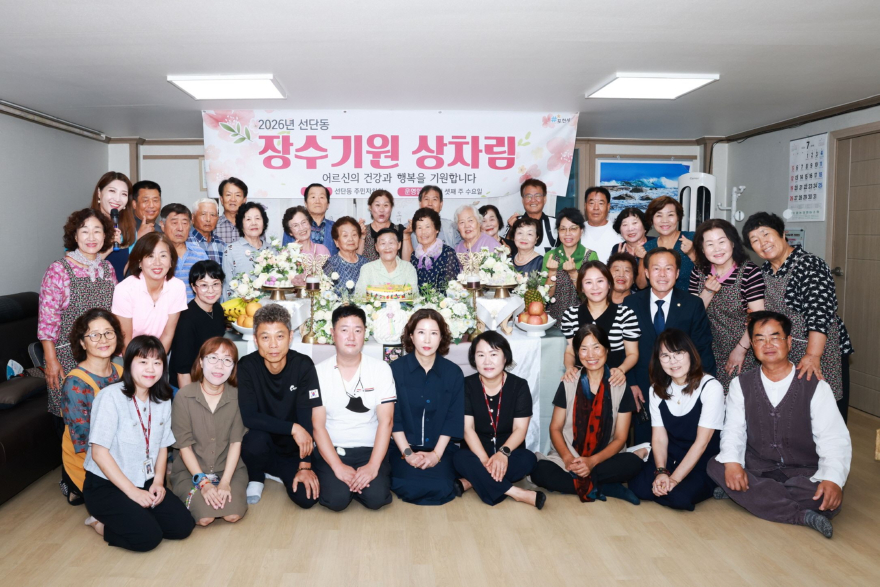
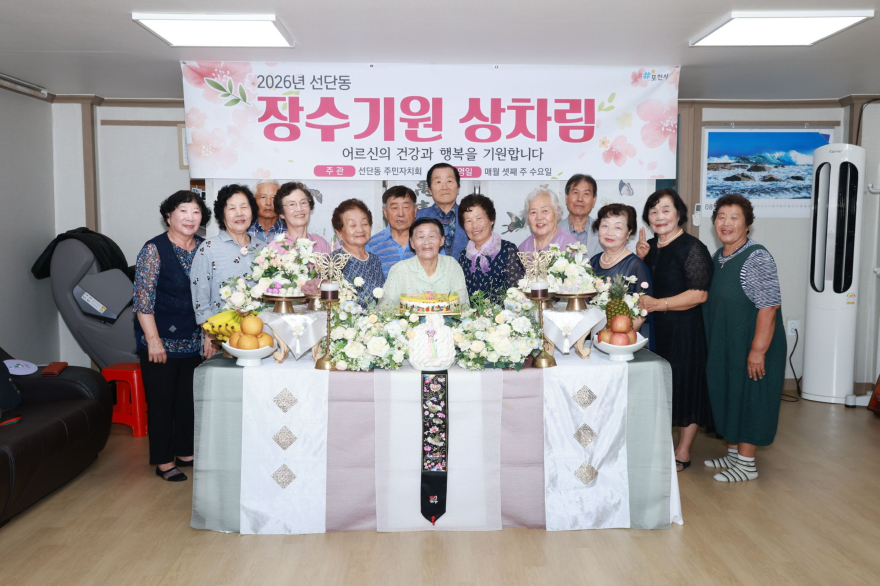
Pocheon City’s Seondan-dong Resident Autonomy Committee recently launched its "Jangsu Sangcharim" (Longevity Table) initiative for seniors aged 85 and older, signaling an empathetic departure from routine eldercare. By directly celebrating and verifying the well-being of its oldest inhabitants, the community is choosing to actively honor their presence rather than treating them as passive liabilities of the state.
◇ Moving Past the Narrative of Regional Charity
On July 15, 2026, the committee convened its inaugural longevity celebration at the Donggyo 1-tong senior center, curating a program of musical performances, communal dining, and portrait photography. While local observers might easily categorize this as a standard heartwarming regional charity event, consuming it purely as a feel-good anomaly misses its structural utility. In the era of hyper-aging, grassroots autonomy serves as a vital laboratory, testing how effectively localized networks can dissolve social alienation and seal the fissures that centralized bureaucracies cannot reach.
The strategic pivot of this initiative lies in its precise targeting of residents aged 85 and older. This demographic requires heightened institutional sensitivity, as it represents a cohort disproportionately exposed to compound vulnerabilities: acute physical decline, bereavement, and the rapid erosion of immediate social circles. Prioritizing these individuals sends an unmistakable message about a city's core governance values: it demonstrates exactly who a community chooses to center when designing its social architecture.
Refriving care under the banner of celebration alters the psychological dynamic of public assistance. Rather than classifying seniors as administrative burdens to be managed, the longevity table honors the accumulation of their lived histories. While a single communal meal cannot fundamentally alter the macroeconomic hardships of aging, the collective act of public validation—affirming to an individual that they remain visible to their neighbors—carries immense qualitative weight. Loneliness is generated not merely by material deprivation, but by the creeping sensation of becoming invisible. In this regard, the initiative functions as a systematic restoration of human connection.
◇ Aligning Grassroots Care with Demographic Strategy
This grassroots mobilization operates in lockstep with Pocheon’s broader population strategies and upgrades to regional 정주 여건 (living conditions). A sustainable demographic blueprint for a depopulating municipality cannot fixate exclusively on the recruitment of younger demographics or short-term childbirth subsidies. Stabilizing and validating the aging populace that already anchors the territory is an equal prerequisite for regional resilience.
In an urban-rural complex, the daily boundaries of the super-elderly often shrink to their immediate doorstep, rendering formal state check-ins irregular. Here, community-led associations step into the vacuum, acting as an indispensable defensive line. A premium living environment is ultimately measured by whether its oldest residents can age without descending into severe alienation.
To translate this symbolic gesture into a durable structural asset, however, local planners must navigate several core challenges:
Programmatic Continuity: The longevity initiative must transcend the status of a one-off performance; the true metric of success is whether it establishes an unbroken pipeline of post-event engagement.
Diagnostic Integration: The format of celebration must be utilized as a gateway to audit practical welfare deficits—such as food insecurity, mobility limitations, and healthcare access gaps.
Calibrated Co-Governance: A seamless division of labor must exist between civic autonomy groups and formal administrative welfare centers, blending grassroots agility with institutional funding and long-term casework.
◇ The Road Ahead: Turning Joy Into Public Policy
The Seondan-dong committee’s plan to scale this initiative into a traveling rotation across various regional senior centers is a highly sophisticated move. Rather than waiting for isolated individuals to approach the state, governance enters the familiar spaces of the citizenry. Senior centers are not merely recreational zones; they serve as primary civic nexus points for real-time vulnerability detection. When communal joy is synchronized with systematic data collection, a city builds a genuinely resilient social infrastructure.
Reflecting on the campaign, Seondan-dong Resident Autonomy President Choi Yu-jung noted the profound sense of civic fulfillment derived from witnessing the immediate joy of the participants. In the architecture of eldercare, emotional well-being and a sense of belonging are not optional luxuries; they are fundamental components of life quality. True respect begins by celebrating a life with genuine joy rather than managing it with clinical detachment.
This sentiment was echoed by Seondan-dong Director Lee Gye-hyang, who pledged reinforced administrative support to refine data tracking for the elderly and eliminate welfare blind spots. When grassroots warmth intersects with rigorous public policy, the isolation of aging begins to recede.
Ultimately, the longevity table is an affirmation of a city's philosophy: a declaration of whose history a community refuses to forget. Honoring the super-elderly is a reflection of how a society values its own timeline. Navigating a hyper-aged future does not require abstract, sprawling schemes. It begins with the unglamorous, vital work of checking on a neighbor, sharing a table, and ensuring that no one is left to age in the dark.
BEST 뉴스
-

경민고 총동문회 골프팀 SBS골프 고교골프최강전 4강 진출 쾌거 10월 13일 준결승 격돌
경민고 총동문회 골프팀 SBS골프 고교골프최강전 4강 진출 쾌거 10월 13일 준결승 격돌 경민고등학교 총동문회 골프팀이 SBS골프 고교골프최강전 8강전에서 승리를 거두며 당당히 4강 진출의 쾌거를 달성했다. 전국 각지의 명문 고교 동문들이 출전해 모교의 명예와 장학금을 걸고 맞붙... -

가을 정취 물들이는 허브아일랜드 관광객을 위한 음악회 성황
가을 정취 물들이는 허브아일랜드 관광객을 위한 음악회 성황 가수 김용국 김봉규 단장의 색소폰 연주 가수 화영,황용 등 다채로운 무대 선사 가을 정취를 더하는 허브아일랜드 관광객을 위한 음악회가 열려 방문객들의 큰 호응을 얻고 있다. 트리플에이픽쳐스와 허브아일랜드... -

글로벌문화교류연합회 MOU 협약식 및 임명장 수여식 국회서 17일 개최
글로벌문화교류연합회 MOU 협약식 및 임명장 수여식 국회서 17일 개최 글로벌문화교류연합회와 장경태 의원실이 공동으로 주최하는 글로벌 문화교류 및 상호협력 활성화를 위한 MOU 협약식 및 임명장 수여식이 다가오는 10월 17일 토요일 14시부터 17시까지 국회 제8간담회의실에서 성대하게 열린다. 글로벌... -

포천 허브아일랜드 핑크뮬리 축제와 야간개장으로 가을맞이 본격화
포천 허브아일랜드 핑크뮬리 축제와 야간개장으로 가을맞이 본격화 경기 포천시 대표 관광지인 허브아일랜드가 가을 시즌을 맞아 핑크뮬리 축제 개막과 함께 야간개장을 본격적으로 운영하며 방문객 맞이에 나섰다. 허브아일랜드는 지난 9월 19일부터 가을 대표 축제인 핑크뮬리 축제를 시작했다. 스카이 허... -

제16회 계룡군문화축제 10월 1일 화려한 개막
제16회 계룡군문화축제 10월 1일 화려한 개막 대한민국 대표 군문화 축제인 제16회 계룡군문화축제가 오는 10월 1일부터 5일까지 5일간 계룡대 활주로 일대에서 펼쳐진다. 10월 1일 개막식은 오후 6시 30분 미8군 군악대 등의 식전공연을 시작으로 막을 올린다. 이어 오후 7시부터는 소향과 포레스텔라의... -

도쿄 번호판 달고 DMZ까지… 일본 경형 로드스터 고성 통일전망대 주차장 포착
도쿄 번호판 달고 DMZ까지… 일본 경형 로드스터 고성 통일전망대 주차장 포착 29일 오전 강원도 고성군 통일전망대 주차장에 일본 현지 번호판을 부착한 경형 오픈카 한 대가 주차되어 있어 관광객들의 눈길을 사로잡았다. 해당 차량은 일본 다이하츠 사의 2인승 경형 하드탑 컨버터블인 '코펜 세로' 모델로...
전체댓글 0
실시간뉴스


![[헤드라인] 아시아 최초 림팩 연합사령관 임무 수행, 대한민국 해군 위상 드높인다](/data/news/202607/news_1783140948.1.jpg)

추천뉴스






의정부시
more +단체
more +-

금감원 공시 개편에 삼천당제약 ‘프로핏 쉐어’ 재평가… ‘진가’ 고개를 들다
금융감독원이 제약·바이오 기업의 공시 체계를 전면 개편하고 계약금과 마일스톤, 로열티 및 이익배분 ... -

포천 신북면 ‘포담장터’ 7월 11일 개장… 먹거리·공연·나눔밥상까지 풍성
경기 포천시 신북면에서 지역 주민과 관광객이 함께 즐길 수 있는 먹거리 장터가 열린다. 포천 신북면 ... -
![[메트로기획] 붓끝에 되살린 소동파의 철학](/data/news/202607/news_1783652004.1.jpg)
[메트로기획] 붓끝에 되살린 소동파의 철학
소동파(蘇軾)의 대표 산문 〈전적벽부(前赤壁賦)〉가 이종훈 포천문화원장의 필치로 대형 서예 작품으... -
![[메트로기획] 모수국과 무지랭이골에 대한 연구 ①](/data/news/202607/news_1783613916.1.jpg)
[메트로기획] 모수국과 무지랭이골에 대한 연구 ①
경기 의정부시 고산주민센터에서 진행하는 치매예방 프로그램 ‘웃음빵빵 두뇌짱짱’ 수업 시간이었다. ...
포토뉴스
more +-

90세 노모가 입혀준 붉은 점퍼 소통과 효심으로 그리는 포천의 미래
90세 노모가 입혀준 붉은 점퍼 소통과 효심으로 그리는 포천의 미래 정치인의 선거복은 흔히 당적을 상징하지만 백영현 포천시장 후보에게 붉은 점퍼는 그 이상의 특별한 의미를 지닌다. 최근 90세 노모가 아들에게 직접 선거 운동복을 입혀주는 모습이 포착되면서 지역 사회에 잔잔한 감동을 전하고 ... -

국민의힘, 포천 시의원 선거 ‘위기론’ 확산... 승부수는 ‘필승 전략공천’
국민의힘, 포천 시의원 선거 ‘위기론’ 확산... 승부수는 ‘필승 전략공천’ 가선거구 서과석·나선거구 안애경 전면 배치설... 박윤경 후보 비례대표 선회론도 ‘솔솔’ 오는 6월 3일 제9회 전국동시지방선거를 앞두고 포천 지역 국민의힘 진영 내에서 위기감이 고조되고 있다. 선거 판세가 안개 속으... -

임종훈 포천시의장, '험로' 무소속 시의원 3선 도전...
"포천 향한 진심으로 승부" 임종훈 포천시의회 의장이 다가오는 지방선거에서 포천시장 출마 대신 '무소속으로 시의원 3선 재도전'이라는 파격적인 행보를 결정하며 지역 정가의 이목을 집중시키고 있다.그동안 유력한 시장 후보군으로 거론되며 체급을 키워온 임 의장의 이번 결정은 정치적 영달을 위한 '높... -
가을 정취 물들이는 허브아일랜드 관광객을 위한 음악회 성황
가을 정취 물들이는 허브아일랜드 관광객을 위한 음악회 성황 가수 김용국 김봉규 단장의 색소폰 연주 가수 화영,황용 등 다채로운 무대 선사 가을 정취를 더하는 허브아일랜드 관광객을 위한 음악회가 열려 방문객들의 큰 호응을 얻고 있다. 트리플에이픽쳐스와 허브아일랜드가 주최 주관하고 포천...
