


- Beyond the 'Two Consecutive Years Outstanding' Achievement: Toward a Pocheon-Style Safety Net Where Caregivers Are Respected
Welfare is not completed merely through policy phrasing or budget allocation. No matter how meticulously crafted a welfare policy may be, if the frontline professionals who directly deliver these services at the heart of residents' lives are exhausted and burned out, the quality of care experienced by citizens will never improve. The working conditions of social welfare personnel—who face people’s urgent crises and grueling daily struggles up close—ultimately determine the baseline of local welfare administration and serve as a yardstick for human rights.
Pocheon City's recent efforts to overhaul systems for improving the working conditions of social welfare workers, coupled with earning the top grade in Gyeonggi Province's evaluation for two consecutive years, offer profound implications that extend beyond mere administrative achievements. They vividly remind us that compassionate welfare for citizens ultimately stems from a fundamental question: How do we treat those who deliver welfare?
◇ From Administrative Ledgers to Core Drivers of Local Welfare
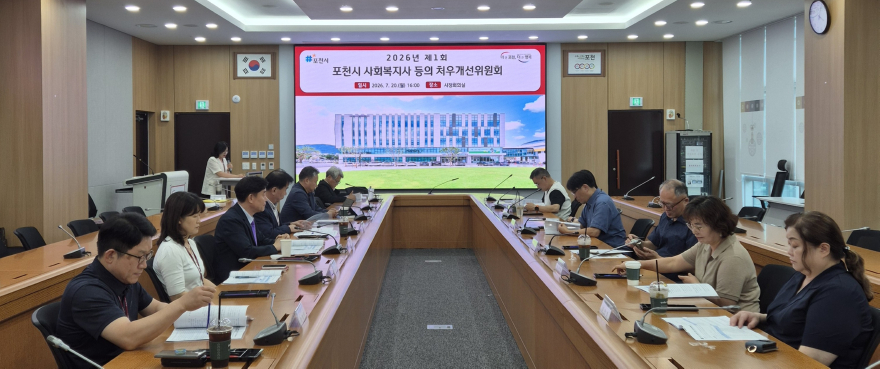
Pocheon City recently held its first "2026 Committee for Improving the Treatment of Social Workers," thoroughly discussing progress on the 3rd Comprehensive Improvement Plan (2026–2028) and follow-up measures resulting from full ordinance revisions. Attended by 12 committee members, the meeting carefully reviewed strategies to expand employee welfare and protect worker rights, refining actionable frameworks to ensure policy effectiveness.
Beneath the dry surface of administrative terminology lies a clear essence: recognizing social welfare workers not merely as subordinate staff carrying out orders, but as equal and crucial pillars sustaining the region's social safety net. When the Committee for Improving Treatment transcends routine formality to become a genuine public forum translating frontline voices into institutional policy, local welfare will achieve a fundamental leap forward.
It is equally noteworthy that Pocheon City received an 'A' grade in Gyeonggi Province's '2026 Policy Evaluation on the Treatment of Social Welfare Workers,' securing its title as an outstanding municipality for two consecutive years following 2025. Far more meaningful than the evaluation metric itself is that Pocheon City has proven it handles working conditions not as a one-time showcase, but as an ongoing, core administrative priority. Welfare that emphasizes recipient-centered policies without securing the stability of the delivery foundation is, after all, akin to building a house on sand.
◇ Emotional Labor and Safety Blind Spots: An Investment in Sustainable Care
The weight of improving working conditions for social welfare personnel extends beyond safeguarding labor rights for a specific profession. Welfare work is an environment of concentrated emotional labor and interpersonal care. Confronting diverse and complex societal wounds—from family conflicts in crisis and the depression of isolated seniors to persons with disabilities in dire need of care and children exposed to abuse—workers endure immense responsibility and emotional exhaustion every single day.
However, if low compensation, unstable working conditions, and physical and emotional safety vulnerabilities during home visits or night duties remain neglected, skilled frontline personnel will inevitably burn out and leave the field. For caregiving work to be sustainable, the caregivers themselves must first lead sustainable lives. Improving their treatment is an indispensable investment to accumulate professional expertise, prevent turnover, and ultimately deliver the most stable, dignified services to citizens.
This aligns precisely with Pocheon City’s overarching goal of "improving residential stability." The factors that encourage citizens to stay long-term and lay down roots span far beyond quality housing or transportation networks. Satisfaction with living conditions is fundamentally shaped by whether a robust welfare system stands ready when old age, sudden illness, or crisis hits. As the quality of welfare labor rises, so too does a community's capacity for inclusion and resilience.
◇ Moving Beyond 'Outstanding' Toward Everyday Impact
Yet, the glowing recognition of "Outstanding for Two Consecutive Years" does not mean all challenges on the ground have been resolved. Rather than resting on accolades, local administration must listen even more attentively to the urgent, practical demands felt by frontline workers.
Improving working conditions cannot be achieved merely through a one-off addition of a few stipend categories. It requires a holistic structural approach:
Rational Wage Structures and Career Recognition: Establishing fair compensation frameworks that accurately reflect job responsibilities and years of experience.
Rights to Rest and a Safe Working Environment: Institutionalizing physical and emotional safeguards during crisis interventions and high-conflict interactions.
Professional Training and Advancement: Guaranteeing structured opportunities for skill enhancement and career progression.
Targeted Support Across Sub-Sectors: Tailoring approaches to match the specific demands of elder care, disability care, child welfare, and case management.
As a Pocheon City official rightly noted, improving conditions for welfare workers is the most honest foundation for elevating public services. When those standing on the front lines of welfare are respected and protected by society, their empathy and expertise directly translate into the everyday well-being of citizens.
The true face of welfare lives on the front lines, and the expression on that face is ultimately determined by the dignity with which local administration treats its workers. Using this milestone as a guiding star, one hopes Pocheon City will evolve into an advanced welfare city that deeply honors the human labor connecting person to person.
BEST 뉴스
-

경민고 총동문회 골프팀 SBS골프 고교골프최강전 4강 진출 쾌거 10월 13일 준결승 격돌
경민고 총동문회 골프팀 SBS골프 고교골프최강전 4강 진출 쾌거 10월 13일 준결승 격돌 경민고등학교 총동문회 골프팀이 SBS골프 고교골프최강전 8강전에서 승리를 거두며 당당히 4강 진출의 쾌거를 달성했다. 전국 각지의 명문 고교 동문들이 출전해 모교의 명예와 장학금을 걸고 맞붙... -

가을 정취 물들이는 허브아일랜드 관광객을 위한 음악회 성황
가을 정취 물들이는 허브아일랜드 관광객을 위한 음악회 성황 가수 김용국 김봉규 단장의 색소폰 연주 가수 화영,황용 등 다채로운 무대 선사 가을 정취를 더하는 허브아일랜드 관광객을 위한 음악회가 열려 방문객들의 큰 호응을 얻고 있다. 트리플에이픽쳐스와 허브아일랜드... -

글로벌문화교류연합회 MOU 협약식 및 임명장 수여식 국회서 17일 개최
글로벌문화교류연합회 MOU 협약식 및 임명장 수여식 국회서 17일 개최 글로벌문화교류연합회와 장경태 의원실이 공동으로 주최하는 글로벌 문화교류 및 상호협력 활성화를 위한 MOU 협약식 및 임명장 수여식이 다가오는 10월 17일 토요일 14시부터 17시까지 국회 제8간담회의실에서 성대하게 열린다. 글로벌... -

포천 허브아일랜드 핑크뮬리 축제와 야간개장으로 가을맞이 본격화
포천 허브아일랜드 핑크뮬리 축제와 야간개장으로 가을맞이 본격화 경기 포천시 대표 관광지인 허브아일랜드가 가을 시즌을 맞아 핑크뮬리 축제 개막과 함께 야간개장을 본격적으로 운영하며 방문객 맞이에 나섰다. 허브아일랜드는 지난 9월 19일부터 가을 대표 축제인 핑크뮬리 축제를 시작했다. 스카이 허... -

도쿄 번호판 달고 DMZ까지… 일본 경형 로드스터 고성 통일전망대 주차장 포착
도쿄 번호판 달고 DMZ까지… 일본 경형 로드스터 고성 통일전망대 주차장 포착 29일 오전 강원도 고성군 통일전망대 주차장에 일본 현지 번호판을 부착한 경형 오픈카 한 대가 주차되어 있어 관광객들의 눈길을 사로잡았다. 해당 차량은 일본 다이하츠 사의 2인승 경형 하드탑 컨버터블인 '코펜 세로' 모델로... -

제16회 계룡군문화축제 10월 1일 화려한 개막
제16회 계룡군문화축제 10월 1일 화려한 개막 대한민국 대표 군문화 축제인 제16회 계룡군문화축제가 오는 10월 1일부터 5일까지 5일간 계룡대 활주로 일대에서 펼쳐진다. 10월 1일 개막식은 오후 6시 30분 미8군 군악대 등의 식전공연을 시작으로 막을 올린다. 이어 오후 7시부터는 소향과 포레스텔라의...
전체댓글 0
실시간뉴스


![[헤드라인] 아시아 최초 림팩 연합사령관 임무 수행, 대한민국 해군 위상 드높인다](/data/news/202607/news_1783140948.1.jpg)

추천뉴스






의정부시
more +단체
more +-

금감원 공시 개편에 삼천당제약 ‘프로핏 쉐어’ 재평가… ‘진가’ 고개를 들다
금융감독원이 제약·바이오 기업의 공시 체계를 전면 개편하고 계약금과 마일스톤, 로열티 및 이익배분 ... -

포천 신북면 ‘포담장터’ 7월 11일 개장… 먹거리·공연·나눔밥상까지 풍성
경기 포천시 신북면에서 지역 주민과 관광객이 함께 즐길 수 있는 먹거리 장터가 열린다. 포천 신북면 ... -
![[메트로기획] 붓끝에 되살린 소동파의 철학](/data/news/202607/news_1783652004.1.jpg)
[메트로기획] 붓끝에 되살린 소동파의 철학
소동파(蘇軾)의 대표 산문 〈전적벽부(前赤壁賦)〉가 이종훈 포천문화원장의 필치로 대형 서예 작품으... -
![[메트로기획] 모수국과 무지랭이골에 대한 연구 ①](/data/news/202607/news_1783613916.1.jpg)
[메트로기획] 모수국과 무지랭이골에 대한 연구 ①
경기 의정부시 고산주민센터에서 진행하는 치매예방 프로그램 ‘웃음빵빵 두뇌짱짱’ 수업 시간이었다. ...
포토뉴스
more +-

90세 노모가 입혀준 붉은 점퍼 소통과 효심으로 그리는 포천의 미래
90세 노모가 입혀준 붉은 점퍼 소통과 효심으로 그리는 포천의 미래 정치인의 선거복은 흔히 당적을 상징하지만 백영현 포천시장 후보에게 붉은 점퍼는 그 이상의 특별한 의미를 지닌다. 최근 90세 노모가 아들에게 직접 선거 운동복을 입혀주는 모습이 포착되면서 지역 사회에 잔잔한 감동을 전하고 ... -

국민의힘, 포천 시의원 선거 ‘위기론’ 확산... 승부수는 ‘필승 전략공천’
국민의힘, 포천 시의원 선거 ‘위기론’ 확산... 승부수는 ‘필승 전략공천’ 가선거구 서과석·나선거구 안애경 전면 배치설... 박윤경 후보 비례대표 선회론도 ‘솔솔’ 오는 6월 3일 제9회 전국동시지방선거를 앞두고 포천 지역 국민의힘 진영 내에서 위기감이 고조되고 있다. 선거 판세가 안개 속으... -

임종훈 포천시의장, '험로' 무소속 시의원 3선 도전...
"포천 향한 진심으로 승부" 임종훈 포천시의회 의장이 다가오는 지방선거에서 포천시장 출마 대신 '무소속으로 시의원 3선 재도전'이라는 파격적인 행보를 결정하며 지역 정가의 이목을 집중시키고 있다.그동안 유력한 시장 후보군으로 거론되며 체급을 키워온 임 의장의 이번 결정은 정치적 영달을 위한 '높... -
가을 정취 물들이는 허브아일랜드 관광객을 위한 음악회 성황
가을 정취 물들이는 허브아일랜드 관광객을 위한 음악회 성황 가수 김용국 김봉규 단장의 색소폰 연주 가수 화영,황용 등 다채로운 무대 선사 가을 정취를 더하는 허브아일랜드 관광객을 위한 음악회가 열려 방문객들의 큰 호응을 얻고 있다. 트리플에이픽쳐스와 허브아일랜드가 주최 주관하고 포천...
