


- Pocheon City’s recent food industry roundtable underscores a vital truth: sustaining foundational enterprises requires turning administrative dialogue into actionable policy.
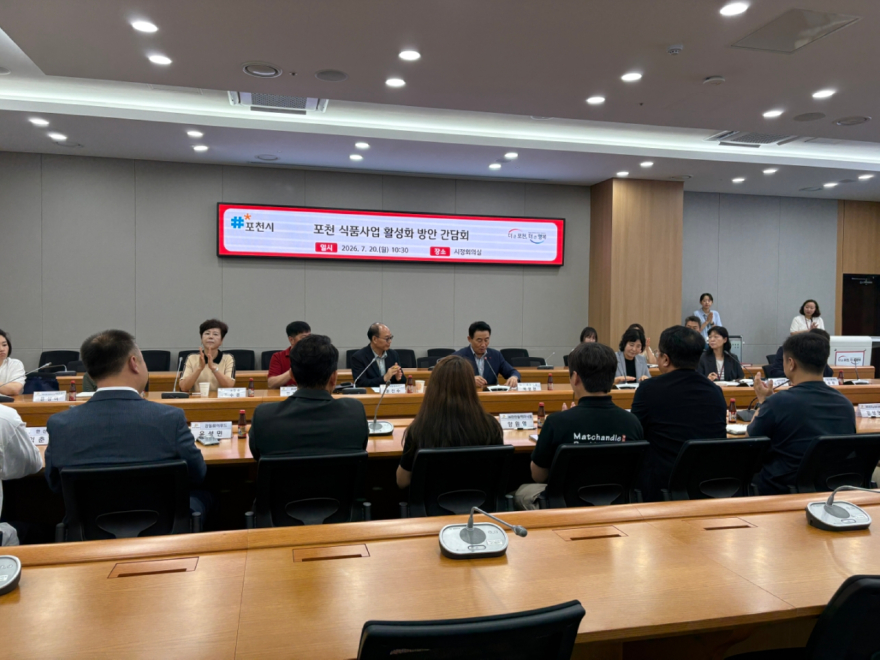
A city’s economic vitality is rarely built solely on high-tech megaprojects or multinational corporate campuses. More often, a community’s everyday resilience, employment stability, and unique identity are sustained by foundational, local industries that have stood the test of time.
The food processing and manufacturing sector is a prime example. Positioned at the intersection of agricultural production, processing, logistics, and retail, it creates an interconnected economic web that keeps capital, jobs, and consumption circulating within the region.
In this context, Pocheon City’s recent roundtable with local food industry leaders represents far more than a routine administrative listening session. It signals a crucial realization: for industrial policy to move beyond mere slogans, local government must first listen precisely to the recurring struggles on the factory floor.
◇ The Structural Vulnerabilities of Local Producers
During the session, local food business representatives voiced pressing operational challenges, including surging raw material prices, persistent labor shortages, restricted distribution channels, and the need for municipal marketing support.
While these grievances may sound familiar, their recurrence underscores their structural depth. Rising input costs, dwindling labor pools, and intense retail competition create a climate where small and mid-sized local manufacturers struggle simply to survive, let alone expand.
Unlike major conglomerates equipped with sprawling logistics networks and massive advertising budgets, regional food enterprises bear the brunt of macroeconomic volatility directly. When raw material costs fluctuate or hiring stalls, production schedules and profit margins deteriorate rapidly. Supporting these businesses is therefore not a matter of granting favors to individual firms; it is an essential investment in the fundamental health of the local economy.
◇ Bridging the Gap Between Product Quality and Market Access
A central takeaway from the Pocheon dialogue was the urgent need for expanded distribution networks and strategic brand promotion. In today’s hyper-connected, digital consumer landscape, crafting a high-quality product is only half the battle. Without robust distribution channels, brand visibility, and direct access to modern retail platforms, regional producers inevitably hit a growth ceiling.
This is precisely where municipal leadership becomes decisive. Local government must intervene where individual enterprises face natural limitations by:
Building Shared Marketing Platforms: Establishing unified municipal brand campaigns and digital promotional channels for local products.
Fostering Collaborative Networks: Creating consortiums among regional producers to pool logistics, packaging, and distribution resources.
Integrating Industrial and Employment Policies: Aligning local workforce development programs directly with the labor demands of regional food processors.
When administrative support tackles small, concrete operational hurdles rather than offering vague promises, business trust in local governance deepens immeasurably.
◇ Economic Resilience Meets Cultural Identity
The local food industry carries a dual significance: it is simultaneously an economic engine and a custodian of cultural identity. The unique flavors, specialty processed goods, and regional brands of a city contribute significantly to its public image and residential appeal. A community becomes a desirable place to live not only because of housing infrastructure, but also because of the rich, tangible lifestyle culture cultivated within its borders.
Sustaining the food sector is ultimately about preserving an entire regional ecosystem—a healthy cycle of local production, employment, consumption, and community living.
Listening to frontline voices is the indispensable first step. However, the true measure of success lies in how seamlessly those voices are translated into long-term, institutional policy. By treating the operational hurdles of local manufacturers as public priorities, Pocheon City can turn frontline feedback into a catalyst for lasting economic resilience. Industrial policy begins on the factory floor, and genuine progress starts by truly listening.
BEST 뉴스
-

경민고 총동문회 골프팀 SBS골프 고교골프최강전 4강 진출 쾌거 10월 13일 준결승 격돌
경민고 총동문회 골프팀 SBS골프 고교골프최강전 4강 진출 쾌거 10월 13일 준결승 격돌 경민고등학교 총동문회 골프팀이 SBS골프 고교골프최강전 8강전에서 승리를 거두며 당당히 4강 진출의 쾌거를 달성했다. 전국 각지의 명문 고교 동문들이 출전해 모교의 명예와 장학금을 걸고 맞붙... -

가을 정취 물들이는 허브아일랜드 관광객을 위한 음악회 성황
가을 정취 물들이는 허브아일랜드 관광객을 위한 음악회 성황 가수 김용국 김봉규 단장의 색소폰 연주 가수 화영,황용 등 다채로운 무대 선사 가을 정취를 더하는 허브아일랜드 관광객을 위한 음악회가 열려 방문객들의 큰 호응을 얻고 있다. 트리플에이픽쳐스와 허브아일랜드... -

글로벌문화교류연합회 MOU 협약식 및 임명장 수여식 국회서 17일 개최
글로벌문화교류연합회 MOU 협약식 및 임명장 수여식 국회서 17일 개최 글로벌문화교류연합회와 장경태 의원실이 공동으로 주최하는 글로벌 문화교류 및 상호협력 활성화를 위한 MOU 협약식 및 임명장 수여식이 다가오는 10월 17일 토요일 14시부터 17시까지 국회 제8간담회의실에서 성대하게 열린다. 글로벌... -

포천 허브아일랜드 핑크뮬리 축제와 야간개장으로 가을맞이 본격화
포천 허브아일랜드 핑크뮬리 축제와 야간개장으로 가을맞이 본격화 경기 포천시 대표 관광지인 허브아일랜드가 가을 시즌을 맞아 핑크뮬리 축제 개막과 함께 야간개장을 본격적으로 운영하며 방문객 맞이에 나섰다. 허브아일랜드는 지난 9월 19일부터 가을 대표 축제인 핑크뮬리 축제를 시작했다. 스카이 허... -

도쿄 번호판 달고 DMZ까지… 일본 경형 로드스터 고성 통일전망대 주차장 포착
도쿄 번호판 달고 DMZ까지… 일본 경형 로드스터 고성 통일전망대 주차장 포착 29일 오전 강원도 고성군 통일전망대 주차장에 일본 현지 번호판을 부착한 경형 오픈카 한 대가 주차되어 있어 관광객들의 눈길을 사로잡았다. 해당 차량은 일본 다이하츠 사의 2인승 경형 하드탑 컨버터블인 '코펜 세로' 모델로... -

제16회 계룡군문화축제 10월 1일 화려한 개막
제16회 계룡군문화축제 10월 1일 화려한 개막 대한민국 대표 군문화 축제인 제16회 계룡군문화축제가 오는 10월 1일부터 5일까지 5일간 계룡대 활주로 일대에서 펼쳐진다. 10월 1일 개막식은 오후 6시 30분 미8군 군악대 등의 식전공연을 시작으로 막을 올린다. 이어 오후 7시부터는 소향과 포레스텔라의...
전체댓글 0
실시간뉴스


![[헤드라인] 아시아 최초 림팩 연합사령관 임무 수행, 대한민국 해군 위상 드높인다](/data/news/202607/news_1783140948.1.jpg)

추천뉴스






의정부시
more +단체
more +-

금감원 공시 개편에 삼천당제약 ‘프로핏 쉐어’ 재평가… ‘진가’ 고개를 들다
금융감독원이 제약·바이오 기업의 공시 체계를 전면 개편하고 계약금과 마일스톤, 로열티 및 이익배분 ... -

포천 신북면 ‘포담장터’ 7월 11일 개장… 먹거리·공연·나눔밥상까지 풍성
경기 포천시 신북면에서 지역 주민과 관광객이 함께 즐길 수 있는 먹거리 장터가 열린다. 포천 신북면 ... -
![[메트로기획] 붓끝에 되살린 소동파의 철학](/data/news/202607/news_1783652004.1.jpg)
[메트로기획] 붓끝에 되살린 소동파의 철학
소동파(蘇軾)의 대표 산문 〈전적벽부(前赤壁賦)〉가 이종훈 포천문화원장의 필치로 대형 서예 작품으... -
![[메트로기획] 모수국과 무지랭이골에 대한 연구 ①](/data/news/202607/news_1783613916.1.jpg)
[메트로기획] 모수국과 무지랭이골에 대한 연구 ①
경기 의정부시 고산주민센터에서 진행하는 치매예방 프로그램 ‘웃음빵빵 두뇌짱짱’ 수업 시간이었다. ...
포토뉴스
more +-

90세 노모가 입혀준 붉은 점퍼 소통과 효심으로 그리는 포천의 미래
90세 노모가 입혀준 붉은 점퍼 소통과 효심으로 그리는 포천의 미래 정치인의 선거복은 흔히 당적을 상징하지만 백영현 포천시장 후보에게 붉은 점퍼는 그 이상의 특별한 의미를 지닌다. 최근 90세 노모가 아들에게 직접 선거 운동복을 입혀주는 모습이 포착되면서 지역 사회에 잔잔한 감동을 전하고 ... -

국민의힘, 포천 시의원 선거 ‘위기론’ 확산... 승부수는 ‘필승 전략공천’
국민의힘, 포천 시의원 선거 ‘위기론’ 확산... 승부수는 ‘필승 전략공천’ 가선거구 서과석·나선거구 안애경 전면 배치설... 박윤경 후보 비례대표 선회론도 ‘솔솔’ 오는 6월 3일 제9회 전국동시지방선거를 앞두고 포천 지역 국민의힘 진영 내에서 위기감이 고조되고 있다. 선거 판세가 안개 속으... -

임종훈 포천시의장, '험로' 무소속 시의원 3선 도전...
"포천 향한 진심으로 승부" 임종훈 포천시의회 의장이 다가오는 지방선거에서 포천시장 출마 대신 '무소속으로 시의원 3선 재도전'이라는 파격적인 행보를 결정하며 지역 정가의 이목을 집중시키고 있다.그동안 유력한 시장 후보군으로 거론되며 체급을 키워온 임 의장의 이번 결정은 정치적 영달을 위한 '높... -
가을 정취 물들이는 허브아일랜드 관광객을 위한 음악회 성황
가을 정취 물들이는 허브아일랜드 관광객을 위한 음악회 성황 가수 김용국 김봉규 단장의 색소폰 연주 가수 화영,황용 등 다채로운 무대 선사 가을 정취를 더하는 허브아일랜드 관광객을 위한 음악회가 열려 방문객들의 큰 호응을 얻고 있다. 트리플에이픽쳐스와 허브아일랜드가 주최 주관하고 포천...
