


- Pocheon’s "Mind Care" initiative demonstrates that social welfare achieves completion not merely through material aid, but through the gentle restoration of human connection.
The blind spots of social welfare do not always wear the visible face of economic poverty. A person may not skip meals or lack shelter, yet remain trapped in a quiet, suffocating state of social isolation.
When days blur together without human contact, when there is no safe outlet to share one's emotions, and when even the smallest daily burdens must be borne entirely alone, life slowly begins to unravel from within. Modern welfare must therefore evolve beyond material subsidies to construct emotional safety nets and foster genuine human connection.
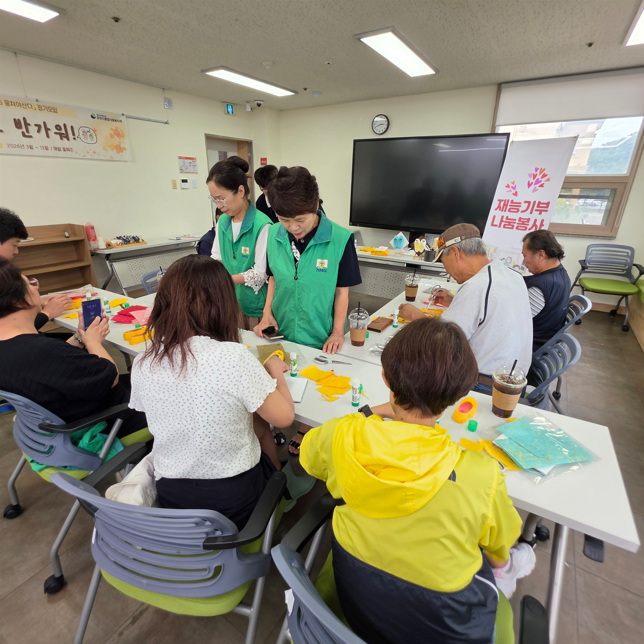
In this light, the recent "Mind Care" talent-donation workshop organized by the Pocheon Branch of Saemaul Literature at the Pocheon Community Welfare Center carries profound significance. What might appear on the surface as a modest cultural experience is, in reality, a crucial first step toward reweaving the frayed fabric of community belonging.
◇ The Architecture of Gentle Re-Connection
During the event, participants from vulnerable, isolated households gathered to craft traditional Hanji paper art and customized fabric mists, sharing conversation as their hands worked.
To an outside observer, it was a simple craft workshop. Yet for an individual experiencing deep social isolation, merely occupying a shared space with others can be a daunting hurdle. Silence often feels safer than speech, forming new relationships can feel overwhelming, and social contact itself frequently triggers acute anxiety.
In such a context, working together on a tangible project creates an environment where conversation flows naturally without pressure. The goal is not merely to complete a craft, but to gently awaken the dormant sense of human connection.
◇ The Hidden Epidemic of Modern Disconnection
Social isolation has emerged as one of the most pressing, understated challenges facing modern society. The rise of single-person households, an aging demographic, changing family structures, and the weakening of traditional neighborhood bonds have left many individuals suspended in fragile, isolated lives.
In an urban-rural complex like Pocheon—where living areas are geographically dispersed—identifying those at risk of isolation is uniquely difficult.
Economic hardship registers in public statistics, but loneliness, despair, and emotional detachment accumulate silently, far beyond the reach of official ledgers.
This makes proactive, community-level emotional care an indispensable priority for local governance.
◇ Why Public Welfare Needs Civil Solidarity
While public administration forms the backbone of social protection, government bureaucracy alone cannot fill every emotional vacuum. State institutions can distribute financial aid and enforce regulations, but they cannot manufacture genuine warmth, shared laughter, or spontaneous empathy.
This is where civic organizations play an irreplaceable role. Voluntary initiatives by local groups gently extend help into spaces where official administrative channels cannot easily reach.
Culture serves as a uniquely effective bridge. Engaging in artistic activities carries low pressure, allowing participants to adjust their pace of interaction. More often than not, the experience of creating something together opens hearts far more effectively than formal counseling or institutional intervention.
◇ The Dignity of Creation
Some may question how crafting Hanji paper or blending fabric mists can make a meaningful dent in social isolation. Yet emotional recovery rarely begins with grand declarations; it starts with tactile, accessible accomplishments.
The physical experience of shaping raw materials into a finished object instills a vital sense of agency. For someone accustomed to feeling helpless or invisible, the simple realization—"I am capable of creating something beautiful"—can serve as the foundational spark for rebuilding self-worth. Healing occurs through these small, repeatable moments of tangible success.
◇ Lowering the Threshold of Support
This initiative provides a clear blueprint for eliminating welfare blind spots. True blind spots encompass not only those who are unaware of available subsidies, but also those who are too emotionally withdrawn to ask for help, or whose isolation keeps them hidden from public view entirely.
The key is lowering the threshold of contact. An isolated resident who feels intimidated by a formal interview at a government office may comfortably attend a neighborhood craft workshop. Cultural engagement thus functions as a low-barrier doorway through which vulnerable citizens can re-enter civic life.
It is equally meaningful that Saemaul Literature is expanding its mission beyond traditional reading campaigns to embrace emotional self-reliance and community restoration. A modern community must care as much about keeping people connected as it does about promoting literacy. Culture becomes a medium for reconciliation, and volunteer service transforms from mere charity into a vital technique for collective survival.
◇ A City Built on Enduring Connections
For such programs to achieve lasting impact, individual events must be backed by institutional continuity. A single workshop cannot permanently dismantle chronic isolation. Cultural entry points must seamlessly link participants to long-term community networks, mental health resources, and social welfare services.
Nevertheless, the act of reaching out first remains an irreplaceable triumph of local solidarity. Loneliness rarely makes headlines, and isolation deepens in quiet obscurity. When a community proactively extends its hand, it offers something far more precious than financial assistance: the reassuring certainty that one is no longer forgotten.
Isolation is dangerous precisely because it is unseen. Reaching those in the shadows requires a delicate, sustained local touch. Welfare need not always take the form of massive administrative apparatuses; sometimes, a quiet afternoon spent crafting, conversing, and laughing alongside neighbors becomes the strongest safety net of all.
BEST 뉴스
-

경민고 총동문회 골프팀 SBS골프 고교골프최강전 4강 진출 쾌거 10월 13일 준결승 격돌
경민고 총동문회 골프팀 SBS골프 고교골프최강전 4강 진출 쾌거 10월 13일 준결승 격돌 경민고등학교 총동문회 골프팀이 SBS골프 고교골프최강전 8강전에서 승리를 거두며 당당히 4강 진출의 쾌거를 달성했다. 전국 각지의 명문 고교 동문들이 출전해 모교의 명예와 장학금을 걸고 맞붙... -

가을 정취 물들이는 허브아일랜드 관광객을 위한 음악회 성황
가을 정취 물들이는 허브아일랜드 관광객을 위한 음악회 성황 가수 김용국 김봉규 단장의 색소폰 연주 가수 화영,황용 등 다채로운 무대 선사 가을 정취를 더하는 허브아일랜드 관광객을 위한 음악회가 열려 방문객들의 큰 호응을 얻고 있다. 트리플에이픽쳐스와 허브아일랜드... -

글로벌문화교류연합회 MOU 협약식 및 임명장 수여식 국회서 17일 개최
글로벌문화교류연합회 MOU 협약식 및 임명장 수여식 국회서 17일 개최 글로벌문화교류연합회와 장경태 의원실이 공동으로 주최하는 글로벌 문화교류 및 상호협력 활성화를 위한 MOU 협약식 및 임명장 수여식이 다가오는 10월 17일 토요일 14시부터 17시까지 국회 제8간담회의실에서 성대하게 열린다. 글로벌... -

포천 허브아일랜드 핑크뮬리 축제와 야간개장으로 가을맞이 본격화
포천 허브아일랜드 핑크뮬리 축제와 야간개장으로 가을맞이 본격화 경기 포천시 대표 관광지인 허브아일랜드가 가을 시즌을 맞아 핑크뮬리 축제 개막과 함께 야간개장을 본격적으로 운영하며 방문객 맞이에 나섰다. 허브아일랜드는 지난 9월 19일부터 가을 대표 축제인 핑크뮬리 축제를 시작했다. 스카이 허... -

도쿄 번호판 달고 DMZ까지… 일본 경형 로드스터 고성 통일전망대 주차장 포착
도쿄 번호판 달고 DMZ까지… 일본 경형 로드스터 고성 통일전망대 주차장 포착 29일 오전 강원도 고성군 통일전망대 주차장에 일본 현지 번호판을 부착한 경형 오픈카 한 대가 주차되어 있어 관광객들의 눈길을 사로잡았다. 해당 차량은 일본 다이하츠 사의 2인승 경형 하드탑 컨버터블인 '코펜 세로' 모델로... -

제16회 계룡군문화축제 10월 1일 화려한 개막
제16회 계룡군문화축제 10월 1일 화려한 개막 대한민국 대표 군문화 축제인 제16회 계룡군문화축제가 오는 10월 1일부터 5일까지 5일간 계룡대 활주로 일대에서 펼쳐진다. 10월 1일 개막식은 오후 6시 30분 미8군 군악대 등의 식전공연을 시작으로 막을 올린다. 이어 오후 7시부터는 소향과 포레스텔라의...
전체댓글 0
실시간뉴스


![[헤드라인] 아시아 최초 림팩 연합사령관 임무 수행, 대한민국 해군 위상 드높인다](/data/news/202607/news_1783140948.1.jpg)

추천뉴스






의정부시
more +단체
more +-

금감원 공시 개편에 삼천당제약 ‘프로핏 쉐어’ 재평가… ‘진가’ 고개를 들다
금융감독원이 제약·바이오 기업의 공시 체계를 전면 개편하고 계약금과 마일스톤, 로열티 및 이익배분 ... -

포천 신북면 ‘포담장터’ 7월 11일 개장… 먹거리·공연·나눔밥상까지 풍성
경기 포천시 신북면에서 지역 주민과 관광객이 함께 즐길 수 있는 먹거리 장터가 열린다. 포천 신북면 ... -
![[메트로기획] 붓끝에 되살린 소동파의 철학](/data/news/202607/news_1783652004.1.jpg)
[메트로기획] 붓끝에 되살린 소동파의 철학
소동파(蘇軾)의 대표 산문 〈전적벽부(前赤壁賦)〉가 이종훈 포천문화원장의 필치로 대형 서예 작품으... -
![[메트로기획] 모수국과 무지랭이골에 대한 연구 ①](/data/news/202607/news_1783613916.1.jpg)
[메트로기획] 모수국과 무지랭이골에 대한 연구 ①
경기 의정부시 고산주민센터에서 진행하는 치매예방 프로그램 ‘웃음빵빵 두뇌짱짱’ 수업 시간이었다. ...
포토뉴스
more +-

90세 노모가 입혀준 붉은 점퍼 소통과 효심으로 그리는 포천의 미래
90세 노모가 입혀준 붉은 점퍼 소통과 효심으로 그리는 포천의 미래 정치인의 선거복은 흔히 당적을 상징하지만 백영현 포천시장 후보에게 붉은 점퍼는 그 이상의 특별한 의미를 지닌다. 최근 90세 노모가 아들에게 직접 선거 운동복을 입혀주는 모습이 포착되면서 지역 사회에 잔잔한 감동을 전하고 ... -

국민의힘, 포천 시의원 선거 ‘위기론’ 확산... 승부수는 ‘필승 전략공천’
국민의힘, 포천 시의원 선거 ‘위기론’ 확산... 승부수는 ‘필승 전략공천’ 가선거구 서과석·나선거구 안애경 전면 배치설... 박윤경 후보 비례대표 선회론도 ‘솔솔’ 오는 6월 3일 제9회 전국동시지방선거를 앞두고 포천 지역 국민의힘 진영 내에서 위기감이 고조되고 있다. 선거 판세가 안개 속으... -

임종훈 포천시의장, '험로' 무소속 시의원 3선 도전...
"포천 향한 진심으로 승부" 임종훈 포천시의회 의장이 다가오는 지방선거에서 포천시장 출마 대신 '무소속으로 시의원 3선 재도전'이라는 파격적인 행보를 결정하며 지역 정가의 이목을 집중시키고 있다.그동안 유력한 시장 후보군으로 거론되며 체급을 키워온 임 의장의 이번 결정은 정치적 영달을 위한 '높... -
가을 정취 물들이는 허브아일랜드 관광객을 위한 음악회 성황
가을 정취 물들이는 허브아일랜드 관광객을 위한 음악회 성황 가수 김용국 김봉규 단장의 색소폰 연주 가수 화영,황용 등 다채로운 무대 선사 가을 정취를 더하는 허브아일랜드 관광객을 위한 음악회가 열려 방문객들의 큰 호응을 얻고 있다. 트리플에이픽쳐스와 허브아일랜드가 주최 주관하고 포천...
