


- Pocheon Agricultural Foundation’s new advisory board reflects a vital municipal shift: securing rural economies requires connecting the farm stand to processing, marketing, and modern distribution.
When we speak of agriculture, our minds instinctively gravitate toward the field. We think of seasonal yields, rainfall, crop health, and market fluctuations. Yet in the modern economy, high-quality cultivation is no longer a guarantee of economic survival.
Growing produce well is merely the ante to enter the game. Long-term viability now demands a far more complex architecture: how raw commodities are processed, how they are branded, through which distribution channels they reach the consumer, and what story connects the harvest to daily life.
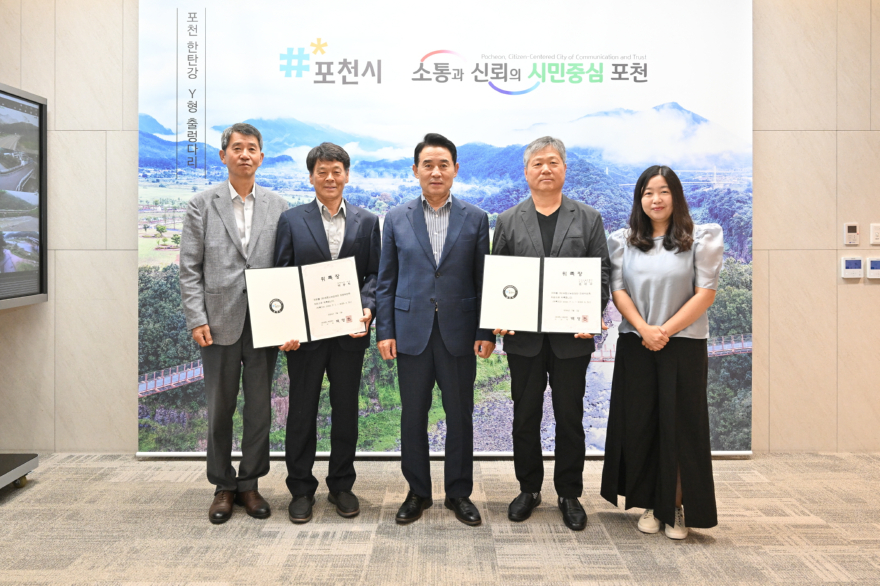
In this context, the Pocheon Agricultural Foundation’s recent appointment of expert advisors specializing in field operations, logistics, food processing, and traditional liquor-based "6th industry" (rural convergence) initiatives represents far more than routine municipal staffing. It signals a necessary paradigm shift—moving local agriculture away from a narrow focus on raw production toward a multi-dimensional, value-added industrial strategy.
◇ The Unforgiving Realities of the Farm Gate
The challenges confronting rural communities today are acute and compounding. Rapid demographic aging, chronic labor deficits, escalating input costs, and volatile logistics expenses have squeezed agricultural margins to unprecedented lows. Simultaneously, consumer habits are evolving at a breakneck pace.
Relying solely on the sale of unprocessed raw crops leaves farmers acutely vulnerable to market shocks. To build lasting resilience, agricultural policy must focus not just on increasing harvest volumes, but on maximizing value addition.
The economic return on the exact same bushel of apples or rice transforms dramatically depending on how it is branded, into what value-added product it is processed, and through which retail pipeline it meets the final consumer.
Consequently, modern agricultural governance can no longer stop at the edge of the field; it must actively navigate the mechanics of commerce and consumer engagement.
◇ Bridging the Gap Between Quality and Market Access
Across regional Korea, the primary reason exceptional produce fails to command fair market prices is rarely a lack of cultivation skill. More often, it is a deficit in market entry and branding.
Modern consumers do not buy commodities in a vacuum; they purchase trust, convenience, brand identity, and narrative. For Pocheon’s agricultural specialties to achieve true competitiveness, they must enter the marketplace in ways that resonate with modern retail expectations.
This is where the foundation's emphasis on rural convergence—commonly known as the 6th industry—becomes decisive. Integrating raw production (1st industry) with processing (2nd industry) and agritourism, culinary heritage, and cultural festivals (3rd industry) turns agriculture into a broader economic engine:
Diversified Revenue Streams: Traditional liquor production, local food hubs, and farm-stay experiences shield farmers from single-crop price crashes.
Place-Based Branding: Leveraging Pocheon's unique cultural and geographical identity creates distinct market differentiation that mass-produced imports cannot replicate.
Commercial Feasibility: Frontline experts bridge the gap between abstract municipal ideas and viable, market-tested business models.
◇ From Advisory Formality to Frontline Translation
The success of any municipal advisory board depends entirely on its operational execution. Too often, administrative committees function as ceremonial window dressing, producing static meeting minutes that fail to keep pace with fast-moving markets.
To deliver genuine value, the Pocheon Agricultural Foundation must ensure that expert insights are translated directly into policy:
1. Actionable Implementation: Advisory recommendations must directly inform budget allocation, program design, and performance metrics.
2. Translating Frontline Reality: Advisors must serve as interpreters between the lived, daily frictions of local farmers and the formalized language of municipal administration.
3. Balanced Strategy: Policy must harmonize immediate problem-solving—such as urgent labor or distribution bottlenecks—with long-term structural branding.
◇ Agriculture as the Bedrock of Regional Retention
In an urban-rural complex like Pocheon, agricultural vitality is not an isolated sectoral interest; it is the bedrock of regional retention and community identity. When farm incomes stabilize, rural households gain a compelling reason to remain, young entrepreneurs see a viable future in agriculture, and the broader local economy retains its foundational strength.
Agricultural competitiveness is no longer measured by volume produced per acre, but by the strength of the connections built across the entire value chain. By designing a seamless framework from farm field to retail shelf, Pocheon can transform its agricultural sector from a struggling legacy industry into a forward-looking engine of regional prosperity.
BEST 뉴스
-

경민고 총동문회 골프팀 SBS골프 고교골프최강전 4강 진출 쾌거 10월 13일 준결승 격돌
경민고 총동문회 골프팀 SBS골프 고교골프최강전 4강 진출 쾌거 10월 13일 준결승 격돌 경민고등학교 총동문회 골프팀이 SBS골프 고교골프최강전 8강전에서 승리를 거두며 당당히 4강 진출의 쾌거를 달성했다. 전국 각지의 명문 고교 동문들이 출전해 모교의 명예와 장학금을 걸고 맞붙... -

가을 정취 물들이는 허브아일랜드 관광객을 위한 음악회 성황
가을 정취 물들이는 허브아일랜드 관광객을 위한 음악회 성황 가수 김용국 김봉규 단장의 색소폰 연주 가수 화영,황용 등 다채로운 무대 선사 가을 정취를 더하는 허브아일랜드 관광객을 위한 음악회가 열려 방문객들의 큰 호응을 얻고 있다. 트리플에이픽쳐스와 허브아일랜드... -

글로벌문화교류연합회 MOU 협약식 및 임명장 수여식 국회서 17일 개최
글로벌문화교류연합회 MOU 협약식 및 임명장 수여식 국회서 17일 개최 글로벌문화교류연합회와 장경태 의원실이 공동으로 주최하는 글로벌 문화교류 및 상호협력 활성화를 위한 MOU 협약식 및 임명장 수여식이 다가오는 10월 17일 토요일 14시부터 17시까지 국회 제8간담회의실에서 성대하게 열린다. 글로벌... -

포천 허브아일랜드 핑크뮬리 축제와 야간개장으로 가을맞이 본격화
포천 허브아일랜드 핑크뮬리 축제와 야간개장으로 가을맞이 본격화 경기 포천시 대표 관광지인 허브아일랜드가 가을 시즌을 맞아 핑크뮬리 축제 개막과 함께 야간개장을 본격적으로 운영하며 방문객 맞이에 나섰다. 허브아일랜드는 지난 9월 19일부터 가을 대표 축제인 핑크뮬리 축제를 시작했다. 스카이 허... -

제16회 계룡군문화축제 10월 1일 화려한 개막
제16회 계룡군문화축제 10월 1일 화려한 개막 대한민국 대표 군문화 축제인 제16회 계룡군문화축제가 오는 10월 1일부터 5일까지 5일간 계룡대 활주로 일대에서 펼쳐진다. 10월 1일 개막식은 오후 6시 30분 미8군 군악대 등의 식전공연을 시작으로 막을 올린다. 이어 오후 7시부터는 소향과 포레스텔라의... -

도쿄 번호판 달고 DMZ까지… 일본 경형 로드스터 고성 통일전망대 주차장 포착
도쿄 번호판 달고 DMZ까지… 일본 경형 로드스터 고성 통일전망대 주차장 포착 29일 오전 강원도 고성군 통일전망대 주차장에 일본 현지 번호판을 부착한 경형 오픈카 한 대가 주차되어 있어 관광객들의 눈길을 사로잡았다. 해당 차량은 일본 다이하츠 사의 2인승 경형 하드탑 컨버터블인 '코펜 세로' 모델로...
전체댓글 0
실시간뉴스


![[헤드라인] 아시아 최초 림팩 연합사령관 임무 수행, 대한민국 해군 위상 드높인다](/data/news/202607/news_1783140948.1.jpg)

추천뉴스






의정부시
more +단체
more +-

금감원 공시 개편에 삼천당제약 ‘프로핏 쉐어’ 재평가… ‘진가’ 고개를 들다
금융감독원이 제약·바이오 기업의 공시 체계를 전면 개편하고 계약금과 마일스톤, 로열티 및 이익배분 ... -

포천 신북면 ‘포담장터’ 7월 11일 개장… 먹거리·공연·나눔밥상까지 풍성
경기 포천시 신북면에서 지역 주민과 관광객이 함께 즐길 수 있는 먹거리 장터가 열린다. 포천 신북면 ... -
![[메트로기획] 붓끝에 되살린 소동파의 철학](/data/news/202607/news_1783652004.1.jpg)
[메트로기획] 붓끝에 되살린 소동파의 철학
소동파(蘇軾)의 대표 산문 〈전적벽부(前赤壁賦)〉가 이종훈 포천문화원장의 필치로 대형 서예 작품으... -
![[메트로기획] 모수국과 무지랭이골에 대한 연구 ①](/data/news/202607/news_1783613916.1.jpg)
[메트로기획] 모수국과 무지랭이골에 대한 연구 ①
경기 의정부시 고산주민센터에서 진행하는 치매예방 프로그램 ‘웃음빵빵 두뇌짱짱’ 수업 시간이었다. ...
포토뉴스
more +-

90세 노모가 입혀준 붉은 점퍼 소통과 효심으로 그리는 포천의 미래
90세 노모가 입혀준 붉은 점퍼 소통과 효심으로 그리는 포천의 미래 정치인의 선거복은 흔히 당적을 상징하지만 백영현 포천시장 후보에게 붉은 점퍼는 그 이상의 특별한 의미를 지닌다. 최근 90세 노모가 아들에게 직접 선거 운동복을 입혀주는 모습이 포착되면서 지역 사회에 잔잔한 감동을 전하고 ... -

국민의힘, 포천 시의원 선거 ‘위기론’ 확산... 승부수는 ‘필승 전략공천’
국민의힘, 포천 시의원 선거 ‘위기론’ 확산... 승부수는 ‘필승 전략공천’ 가선거구 서과석·나선거구 안애경 전면 배치설... 박윤경 후보 비례대표 선회론도 ‘솔솔’ 오는 6월 3일 제9회 전국동시지방선거를 앞두고 포천 지역 국민의힘 진영 내에서 위기감이 고조되고 있다. 선거 판세가 안개 속으... -

임종훈 포천시의장, '험로' 무소속 시의원 3선 도전...
"포천 향한 진심으로 승부" 임종훈 포천시의회 의장이 다가오는 지방선거에서 포천시장 출마 대신 '무소속으로 시의원 3선 재도전'이라는 파격적인 행보를 결정하며 지역 정가의 이목을 집중시키고 있다.그동안 유력한 시장 후보군으로 거론되며 체급을 키워온 임 의장의 이번 결정은 정치적 영달을 위한 '높... -
가을 정취 물들이는 허브아일랜드 관광객을 위한 음악회 성황
가을 정취 물들이는 허브아일랜드 관광객을 위한 음악회 성황 가수 김용국 김봉규 단장의 색소폰 연주 가수 화영,황용 등 다채로운 무대 선사 가을 정취를 더하는 허브아일랜드 관광객을 위한 음악회가 열려 방문객들의 큰 호응을 얻고 있다. 트리플에이픽쳐스와 허브아일랜드가 주최 주관하고 포천...
