


How a rain-soaked field trip by Gunnae-myeon residents reveals a profound truth about modern placemaking: true municipal livability begins where infrastructure meets everyday life.
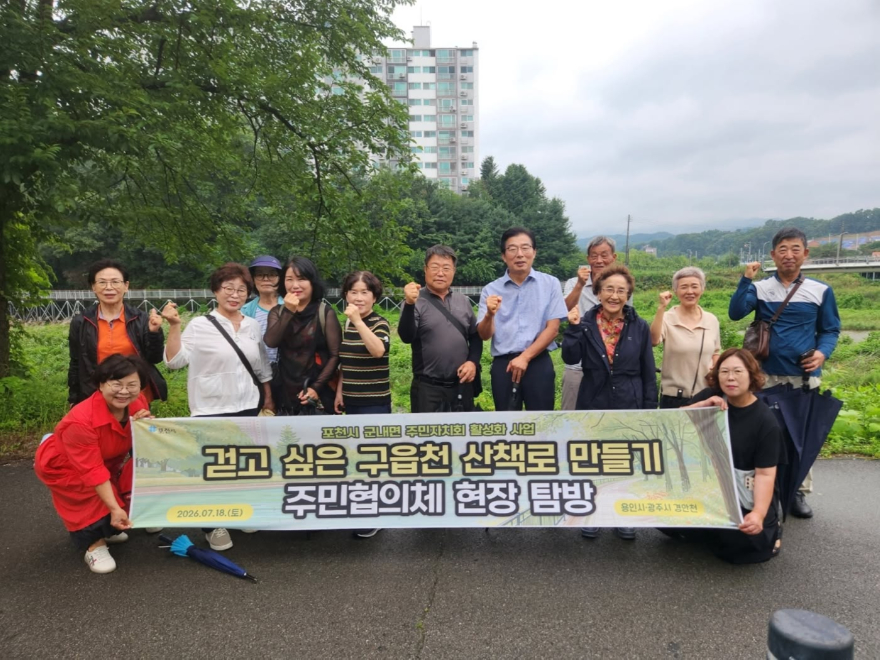
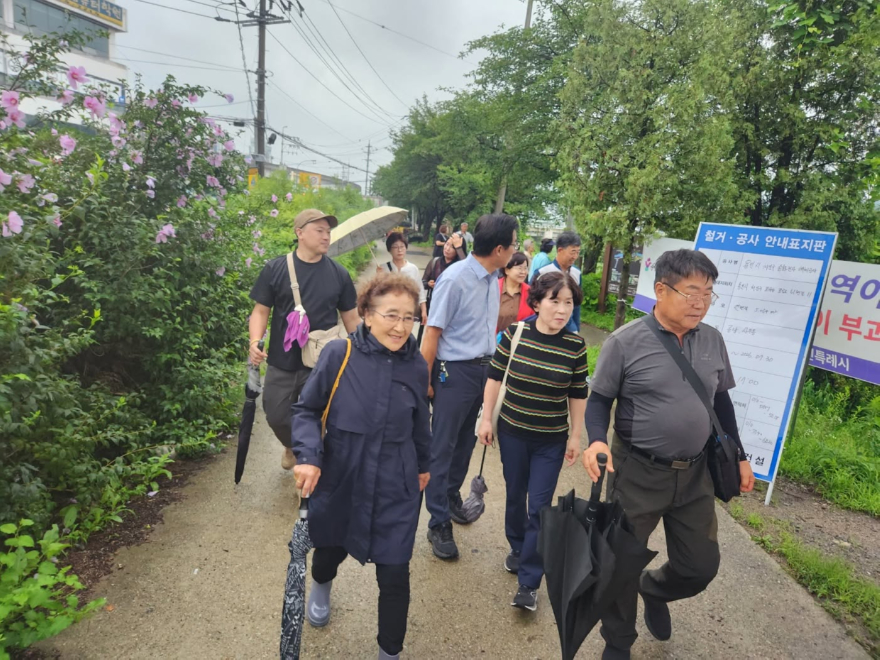
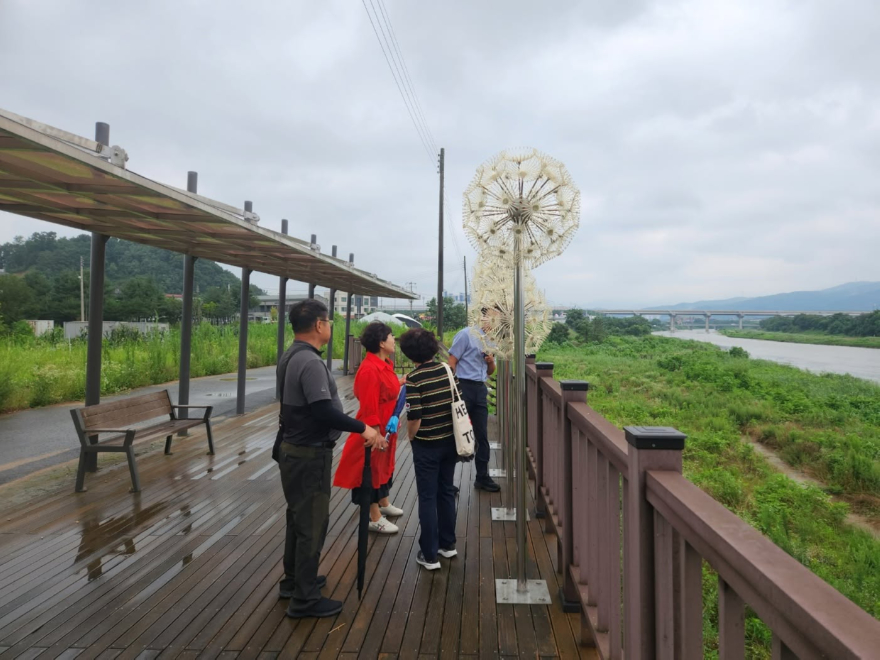
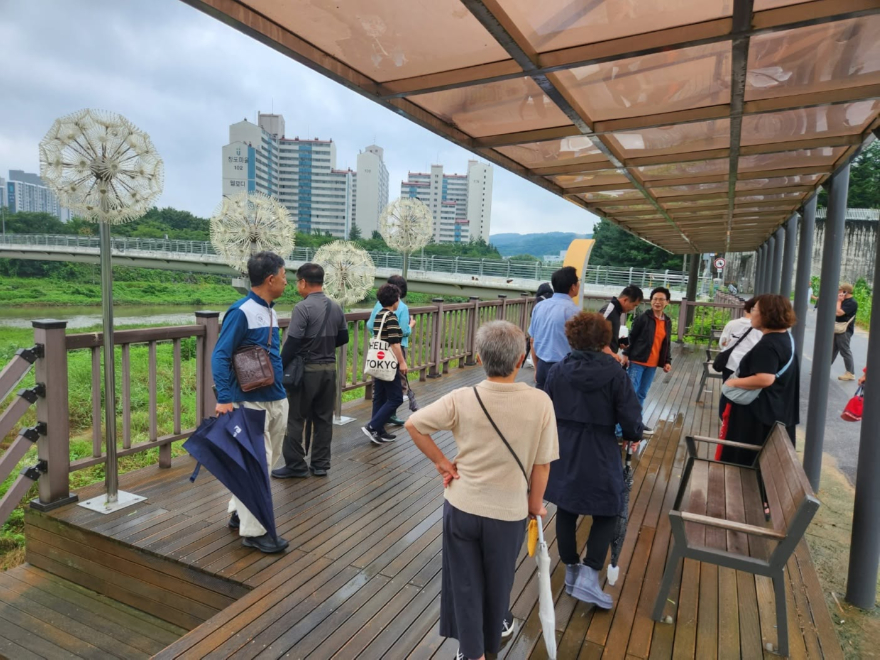
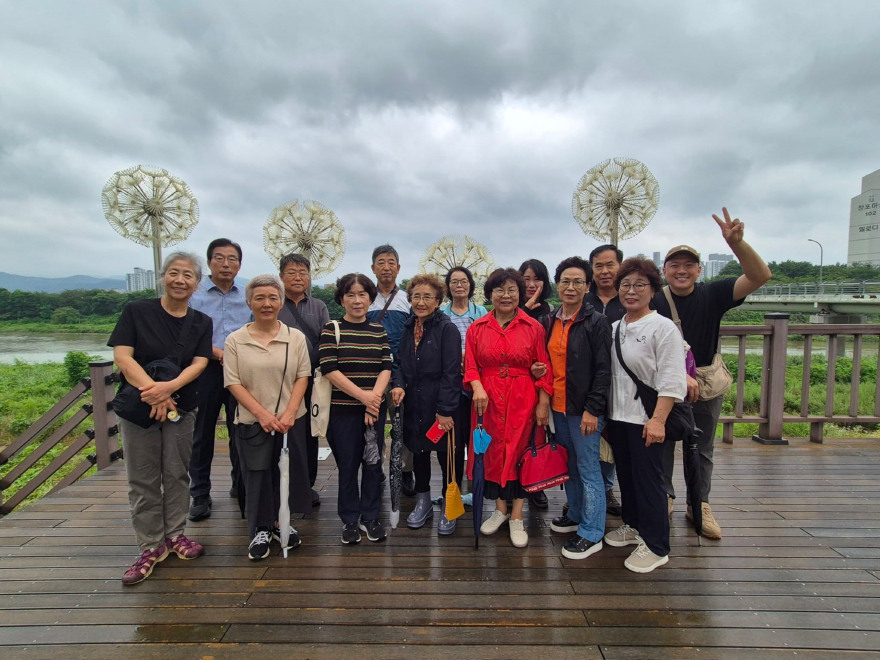
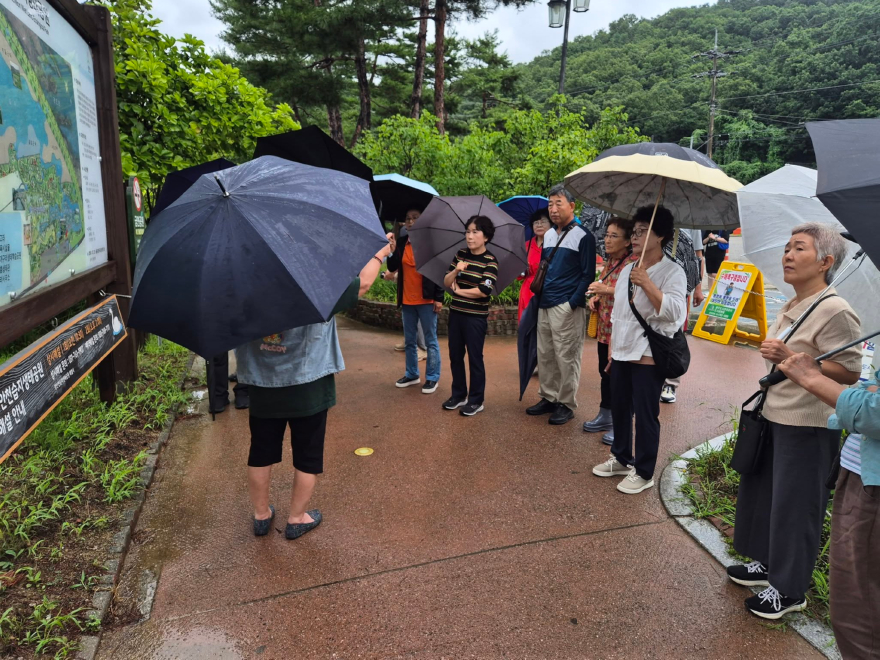
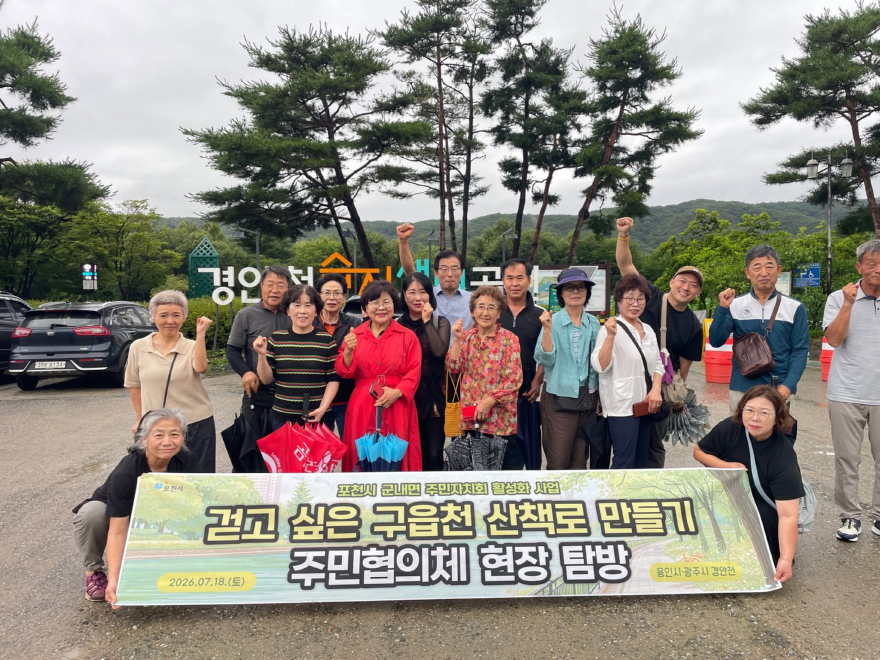
Visits to development sites in pouring rain are rarely comfortable. Yet when 15 members of the Gunnae-myeon Residents' Association and the "Walkable Gueupcheon Promenade" committee recently trudged through a downpour to study the Gyeongancheon stream, their dedication signaled something profound. The future of a community’s public space cannot be drawn behind dry, insulated office desks.
For decades, river management was treated strictly as an exercise in civil engineering—a matter of flood control, bank stabilization, and swift drainage. Today, however, citizens demand far more from their urban waterways. They expect streams to be safe, inviting, ecologically vibrant, and woven into the fabric of daily life.
The Gunnae-myeon delegation’s journey to Yongin and Gwangju to envision the future of Pocheon’s Gueupcheon Stream was not a routine municipal field trip; it was an act of collective civic imagination.
◇ The Art of Human-Scale Placemaking
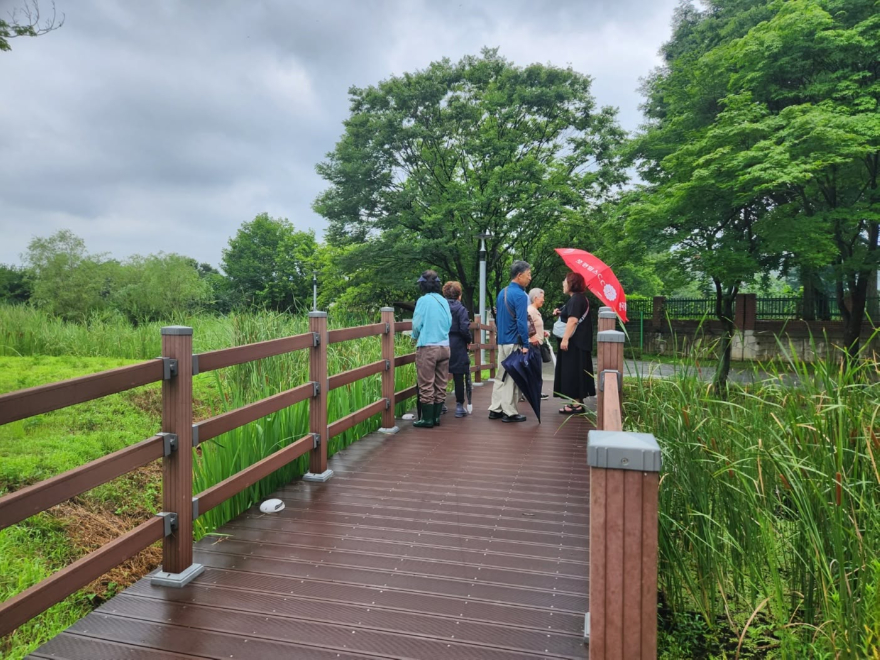
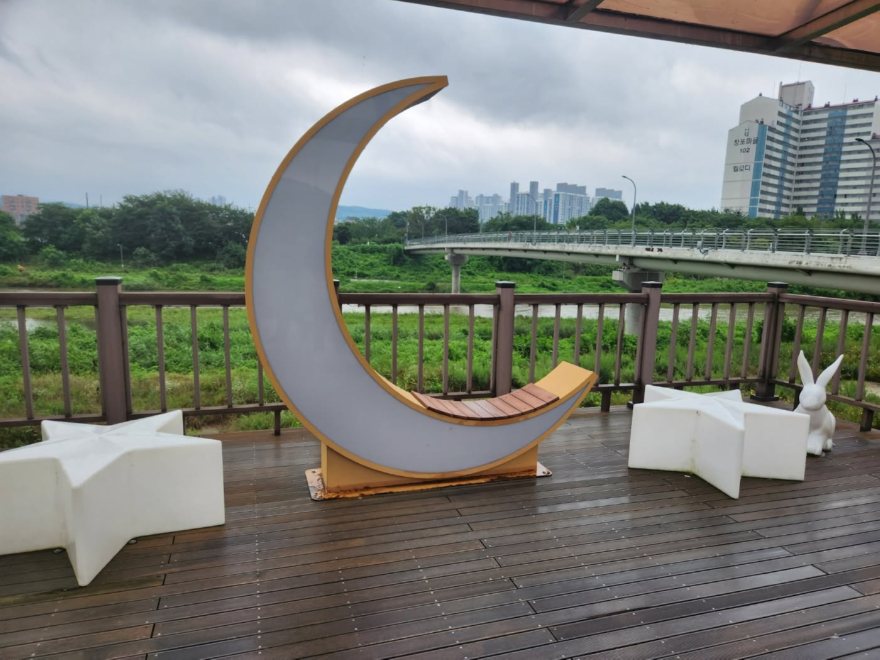
The delegation’s itinerary focused on practical, human-centered solutions. In Yongin’s Dunjeon-ri, they inspected riverside decks, scenic lighting, shade canopies, and artfully designed benches. Later, at the Gwangju Gyeongancheon Ecological Wetland Park, they examined wetland restoration models, water purification systems, and sustainable trail maintenance.
What made this study tour notable was not merely what the residents observed, but how they observed it.
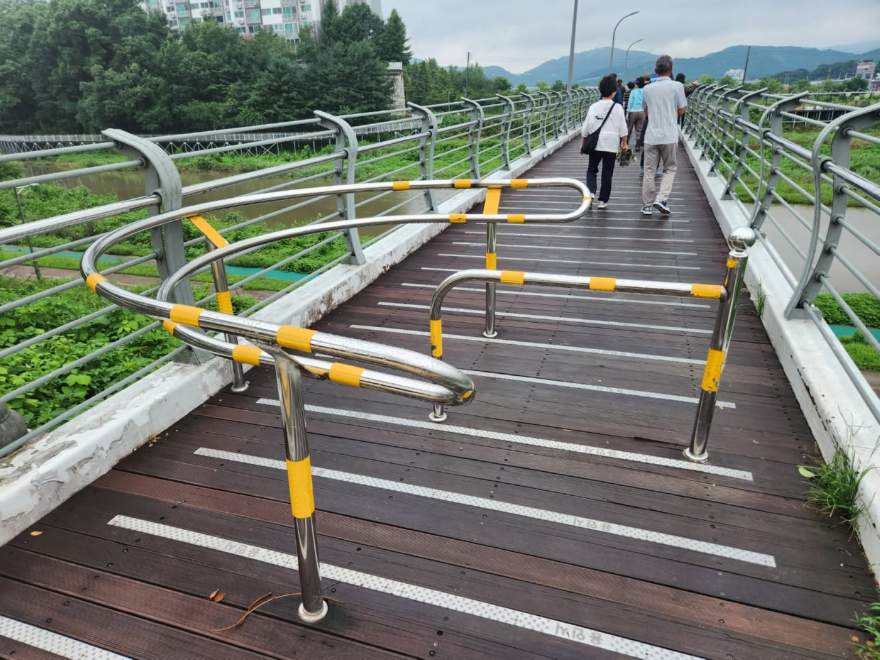
Beyond admiring decorative photo spots and ambient illumination, the group focused intently on granular safety infrastructure: ramp inclines, safety guardrails, bridge-top barriers, and anti-slip paving materials.
A truly walkable path is never built on aesthetics alone. A space becomes genuinely public only when it is accessible to everyone—when an elderly resident can stroll without fear of slipping on a wet afternoon, and when parents can let their children run freely ahead. Beauty attracts the visitor, but safety and convenience build the daily habit.
◇ Ecological Restoration as Living Infrastructure
The ecological model demonstrated at the Gwangju wetland park offers an equally crucial perspective. Modern waterfront design has evolved beyond concrete embankments toward a philosophy where ecology and leisure coexist.
Reeds and aquatic plants do not merely decorate the bank; they filter runoff, nourish local biodiversity, and offer residents a serene connection to seasonal rhythms.
By restoring the river as a living ecosystem rather than a rigid drainage ditch, local governments give residents a sanctuary for rest while embedding environmental sustainability into the town’s core infrastructure. It reframes the river not as a space conquered by human engineering, but as a shared habitat shared with nature.
◇ Everyday Spaces and Regional Retention
For Gueupcheon, which has historically been managed through a narrow lens of flood prevention, this field study marks a pivotal turning point. Flood control remains non-negotiable, but when a river serves only that functional purpose, it alienates the community. Water flows, but people stay away.
When flood mitigation is balanced with recreational and ecological functions, a stream transforms into a community asset.
This transformation directly intersects with regional livability and population retention. A great community is not built solely on grand civic landmarks or industrial parks. It is defined by whether a resident can walk safely along a clean stream near their home, watch the seasons change, and share a quiet moment with neighbors. In regional towns, the quality of these everyday public spaces shapes residents' emotional attachment to their hometowns.
◇ From Benchmarking to Local Translation
The true value of this initiative lies in its bottom-up origins. Rather than passively receiving a master plan handed down by municipal bureaucrats, residents took the initiative to observe, compare, and ask: "What kind of path does our village truly need?"
Public spaces endure longest when they reflect the lived experiences and subtle preferences of the people who use them every day.
Naturally, benchmarking has its limits. Replicating another city's successful park without adaptation rarely works. Gueupcheon’s water volume, channel width, surrounding residential density, and maintenance capacity must dictate its ultimate design. Decorative lighting and photo-ops matter far less than long-term durability, pedestrian safety, and low-cost upkeep. The goal is not to clone Gyeongancheon, but to translate its best principles into a bespoke solution for Pocheon.
◇ Streams That Connect Communities
The rain-soaked inspection carried a clear message: a great promenade is not conceived on paper; it is discovered by walking the ground, testing the pavement, checking the handrails, and measuring the light.
A river must do more than carry water out of town. It should invite residents to slow down, rest, converse, and reconnect with their neighborhood. If Gunnae-myeon can blend the lessons of Gyeongancheon with the unique geography of Gueupcheon, this modest stream can transcend its role as a drainage channel to become the living heart of the community. A truly great path is not built by imitating distant landmarks, but by carefully crafting a trail that neighbors genuinely love to walk.
BEST 뉴스
-

경민고 총동문회 골프팀 SBS골프 고교골프최강전 4강 진출 쾌거 10월 13일 준결승 격돌
경민고 총동문회 골프팀 SBS골프 고교골프최강전 4강 진출 쾌거 10월 13일 준결승 격돌 경민고등학교 총동문회 골프팀이 SBS골프 고교골프최강전 8강전에서 승리를 거두며 당당히 4강 진출의 쾌거를 달성했다. 전국 각지의 명문 고교 동문들이 출전해 모교의 명예와 장학금을 걸고 맞붙... -

가을 정취 물들이는 허브아일랜드 관광객을 위한 음악회 성황
가을 정취 물들이는 허브아일랜드 관광객을 위한 음악회 성황 가수 김용국 김봉규 단장의 색소폰 연주 가수 화영,황용 등 다채로운 무대 선사 가을 정취를 더하는 허브아일랜드 관광객을 위한 음악회가 열려 방문객들의 큰 호응을 얻고 있다. 트리플에이픽쳐스와 허브아일랜드... -

글로벌문화교류연합회 MOU 협약식 및 임명장 수여식 국회서 17일 개최
글로벌문화교류연합회 MOU 협약식 및 임명장 수여식 국회서 17일 개최 글로벌문화교류연합회와 장경태 의원실이 공동으로 주최하는 글로벌 문화교류 및 상호협력 활성화를 위한 MOU 협약식 및 임명장 수여식이 다가오는 10월 17일 토요일 14시부터 17시까지 국회 제8간담회의실에서 성대하게 열린다. 글로벌... -

포천 허브아일랜드 핑크뮬리 축제와 야간개장으로 가을맞이 본격화
포천 허브아일랜드 핑크뮬리 축제와 야간개장으로 가을맞이 본격화 경기 포천시 대표 관광지인 허브아일랜드가 가을 시즌을 맞아 핑크뮬리 축제 개막과 함께 야간개장을 본격적으로 운영하며 방문객 맞이에 나섰다. 허브아일랜드는 지난 9월 19일부터 가을 대표 축제인 핑크뮬리 축제를 시작했다. 스카이 허... -

제16회 계룡군문화축제 10월 1일 화려한 개막
제16회 계룡군문화축제 10월 1일 화려한 개막 대한민국 대표 군문화 축제인 제16회 계룡군문화축제가 오는 10월 1일부터 5일까지 5일간 계룡대 활주로 일대에서 펼쳐진다. 10월 1일 개막식은 오후 6시 30분 미8군 군악대 등의 식전공연을 시작으로 막을 올린다. 이어 오후 7시부터는 소향과 포레스텔라의... -

도쿄 번호판 달고 DMZ까지… 일본 경형 로드스터 고성 통일전망대 주차장 포착
도쿄 번호판 달고 DMZ까지… 일본 경형 로드스터 고성 통일전망대 주차장 포착 29일 오전 강원도 고성군 통일전망대 주차장에 일본 현지 번호판을 부착한 경형 오픈카 한 대가 주차되어 있어 관광객들의 눈길을 사로잡았다. 해당 차량은 일본 다이하츠 사의 2인승 경형 하드탑 컨버터블인 '코펜 세로' 모델로...
전체댓글 0
실시간뉴스


![[헤드라인] 아시아 최초 림팩 연합사령관 임무 수행, 대한민국 해군 위상 드높인다](/data/news/202607/news_1783140948.1.jpg)

추천뉴스






의정부시
more +단체
more +-

금감원 공시 개편에 삼천당제약 ‘프로핏 쉐어’ 재평가… ‘진가’ 고개를 들다
금융감독원이 제약·바이오 기업의 공시 체계를 전면 개편하고 계약금과 마일스톤, 로열티 및 이익배분 ... -

포천 신북면 ‘포담장터’ 7월 11일 개장… 먹거리·공연·나눔밥상까지 풍성
경기 포천시 신북면에서 지역 주민과 관광객이 함께 즐길 수 있는 먹거리 장터가 열린다. 포천 신북면 ... -
![[메트로기획] 붓끝에 되살린 소동파의 철학](/data/news/202607/news_1783652004.1.jpg)
[메트로기획] 붓끝에 되살린 소동파의 철학
소동파(蘇軾)의 대표 산문 〈전적벽부(前赤壁賦)〉가 이종훈 포천문화원장의 필치로 대형 서예 작품으... -
![[메트로기획] 모수국과 무지랭이골에 대한 연구 ①](/data/news/202607/news_1783613916.1.jpg)
[메트로기획] 모수국과 무지랭이골에 대한 연구 ①
경기 의정부시 고산주민센터에서 진행하는 치매예방 프로그램 ‘웃음빵빵 두뇌짱짱’ 수업 시간이었다. ...
포토뉴스
more +-

90세 노모가 입혀준 붉은 점퍼 소통과 효심으로 그리는 포천의 미래
90세 노모가 입혀준 붉은 점퍼 소통과 효심으로 그리는 포천의 미래 정치인의 선거복은 흔히 당적을 상징하지만 백영현 포천시장 후보에게 붉은 점퍼는 그 이상의 특별한 의미를 지닌다. 최근 90세 노모가 아들에게 직접 선거 운동복을 입혀주는 모습이 포착되면서 지역 사회에 잔잔한 감동을 전하고 ... -

국민의힘, 포천 시의원 선거 ‘위기론’ 확산... 승부수는 ‘필승 전략공천’
국민의힘, 포천 시의원 선거 ‘위기론’ 확산... 승부수는 ‘필승 전략공천’ 가선거구 서과석·나선거구 안애경 전면 배치설... 박윤경 후보 비례대표 선회론도 ‘솔솔’ 오는 6월 3일 제9회 전국동시지방선거를 앞두고 포천 지역 국민의힘 진영 내에서 위기감이 고조되고 있다. 선거 판세가 안개 속으... -

임종훈 포천시의장, '험로' 무소속 시의원 3선 도전...
"포천 향한 진심으로 승부" 임종훈 포천시의회 의장이 다가오는 지방선거에서 포천시장 출마 대신 '무소속으로 시의원 3선 재도전'이라는 파격적인 행보를 결정하며 지역 정가의 이목을 집중시키고 있다.그동안 유력한 시장 후보군으로 거론되며 체급을 키워온 임 의장의 이번 결정은 정치적 영달을 위한 '높... -
가을 정취 물들이는 허브아일랜드 관광객을 위한 음악회 성황
가을 정취 물들이는 허브아일랜드 관광객을 위한 음악회 성황 가수 김용국 김봉규 단장의 색소폰 연주 가수 화영,황용 등 다채로운 무대 선사 가을 정취를 더하는 허브아일랜드 관광객을 위한 음악회가 열려 방문객들의 큰 호응을 얻고 있다. 트리플에이픽쳐스와 허브아일랜드가 주최 주관하고 포천...
